

5 Factors That Shape Line Boring Equipment Ownership Costs

A lower upfront cost can become more expensive once downtime and repair needs enter the calculation. The total cost of ownership for line boring equipment goes beyond the purchase price: it includes configuration, maintenance, repairs, and how often you outsource work. Buying can make sense when regular jobs and avoided delays justify ownership; outsourcing may suit occasional or unpredictable work.
It’s reasonable to focus first on the machine’s price, but that figure doesn’t show what it will cost to keep the equipment productive. This article breaks down five factors that shape the decision, including interruptions, how well machine capability matches your jobs, and ongoing upkeep. Weigh ownership against outsourcing based on your operating needs, not just the initial investment.
Table of Contents
1. Downtime costs and avoided production losses
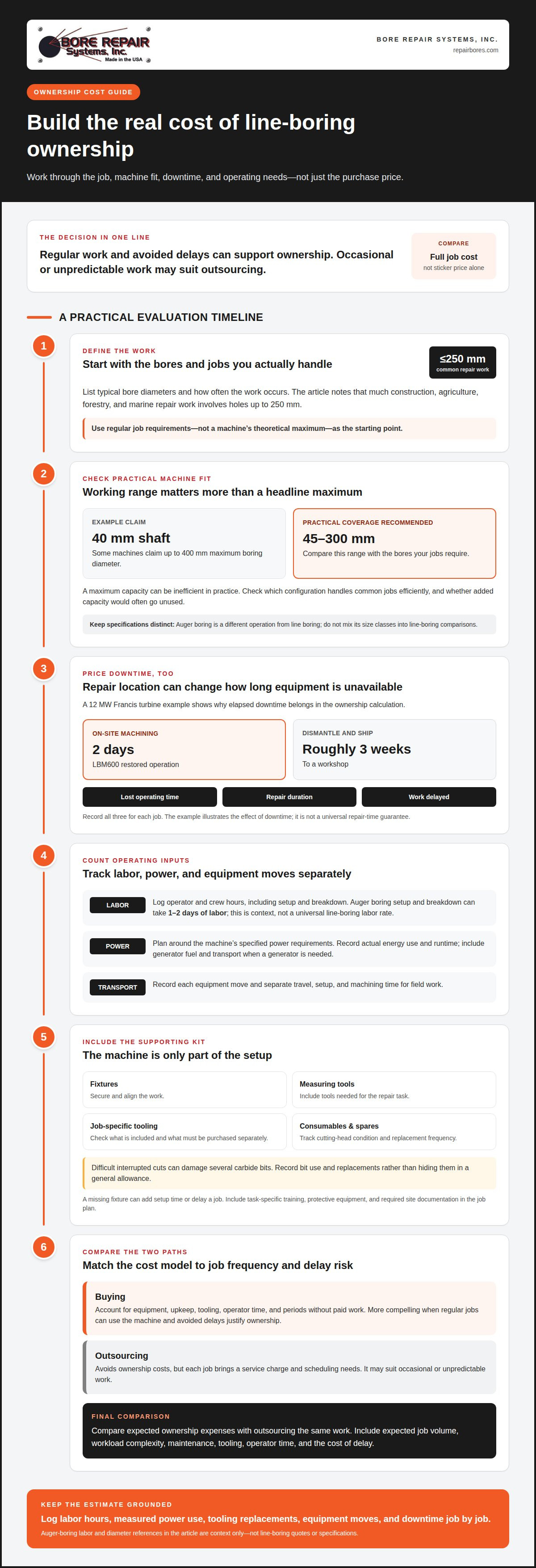
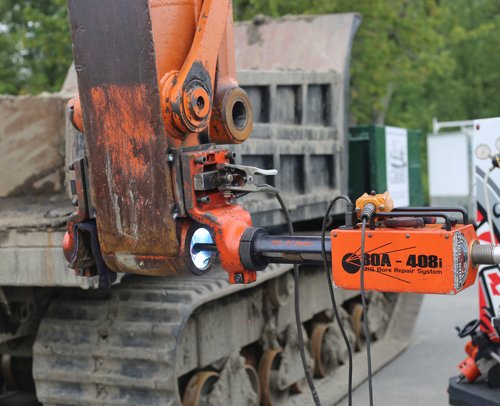
Downtime adds costs beyond wages and machine ownership. A 12 MW Francis turbine illustrates the effect. On-site LBM600 machining restored operation in 2 days. Dismantling and shipping it to a workshop took roughly 3 weeks. The comparison shows why repair location and elapsed downtime belong in ownership calculations. For each job, record lost operating time, repair duration, and the work delayed while equipment is unavailable.
Labor is another direct operating expense. These are market figures for auger boring, not a universal line-boring labor rate. Count operator and crew hours separately, including setup and breakdown. Auger boring setup and breakdown can take 1-2 days of labor, so those hours can materially affect a job’s cost.
Power costs depend on the equipment’s actual draw, the available power source, and operating hours. Use the machine’s specified power requirements to plan the supply, then record energy use and runtime for each job. If the work requires a generator, include its fuel and transport in your operating estimate. Don’t assume power is negligible because cutting time is short: setup and other machine operation also take time.
Safety and compliance add operating costs through task-specific training, protective equipment, and required site documentation. Include those items in the job plan alongside labor and power. Requirements depend on the worksite and task. For example, a field repair may involve different site controls from workshop machining. Budgeting for these needs keeps estimates grounded without assuming one checklist fits every job.
Consumables and cutting components also affect costs. Treat this as an equipment-specific reference, not a line-boring machine quote. Track cutting-head condition, replacement frequency, and the material being machined. Difficult interrupted cuts can damage several carbide bits, so record bit use and replacements instead of hiding them in a general allowance.
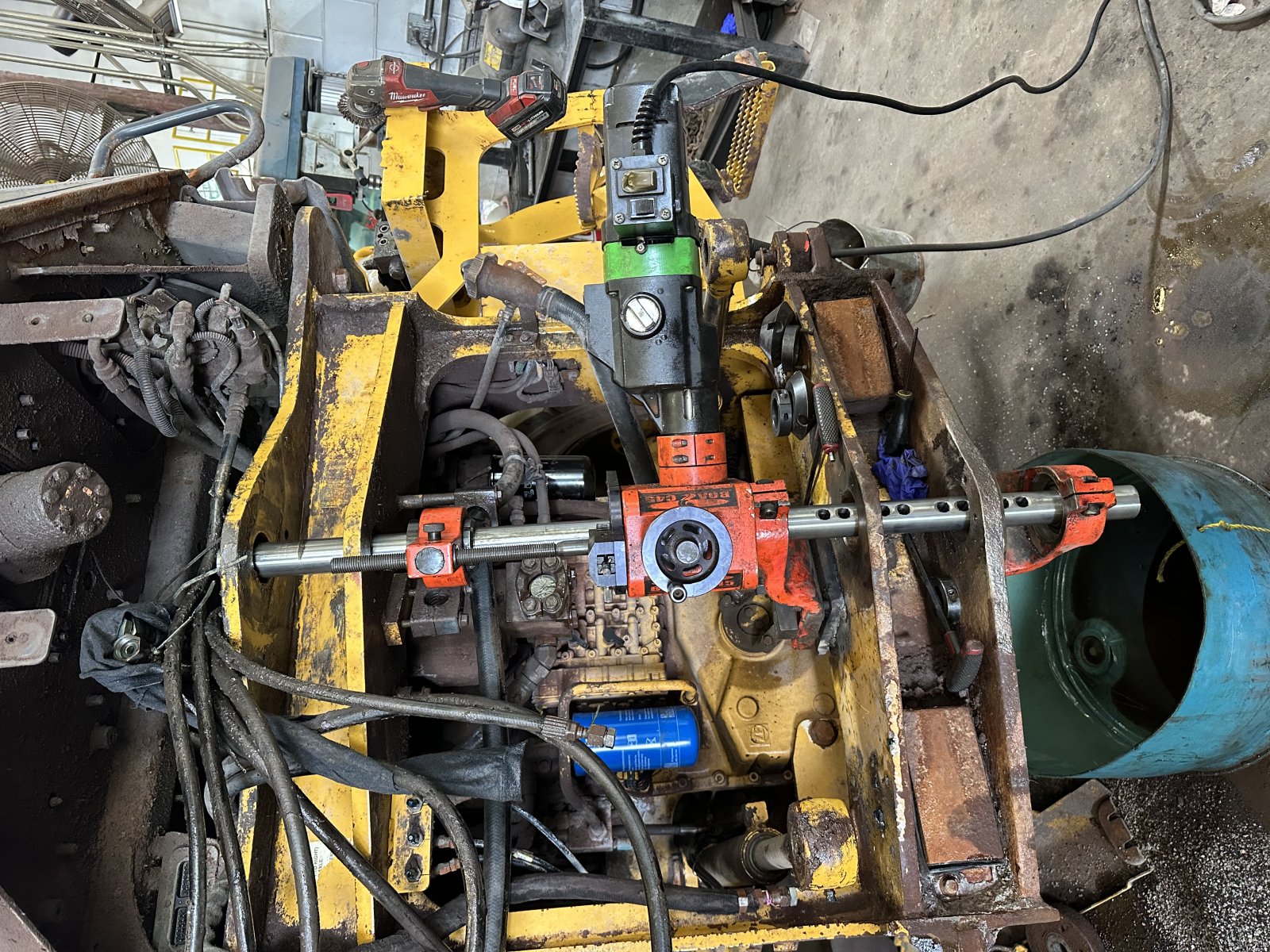
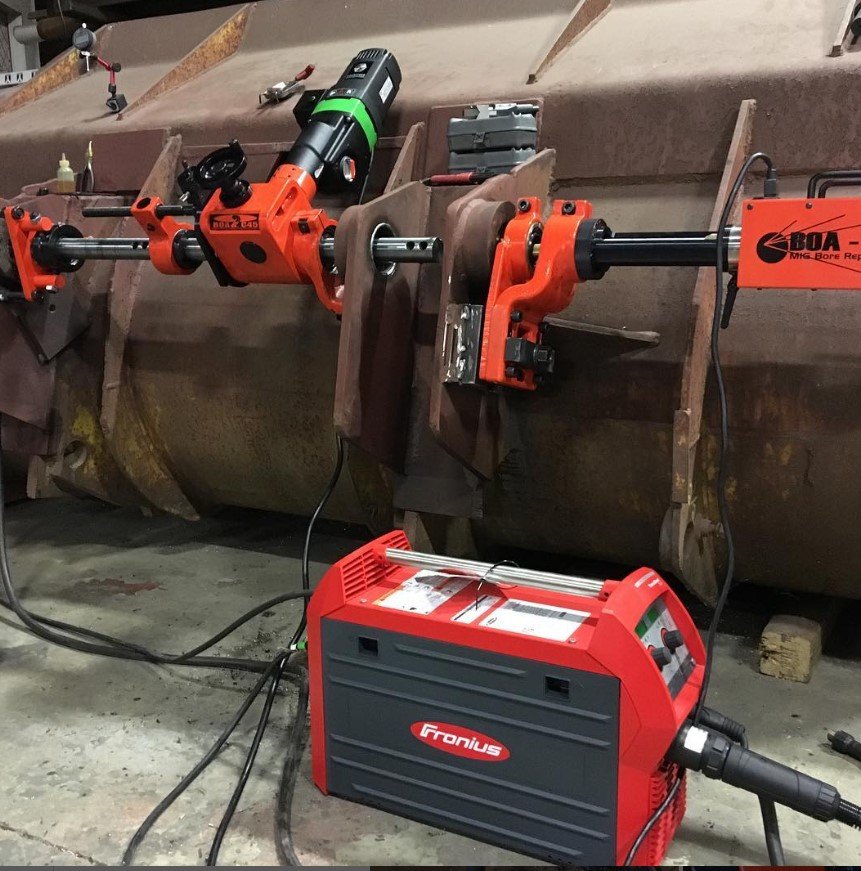
Fixtures and tooling need their own line in the ownership estimate. Include the fixtures needed to secure and align the work, plus measuring tools and job-specific tooling. Their costs depend on the machine configuration and the repair tasks performed. A missing fixture can require extra setup or delay a job. Field planning also benefits from separating travel, setup, and machining time; field repair work considerations can vary with the job location.
Answer “What are the operating costs for labor, power, consumables, and transport?” by tracking each category separately. Log crew hours, measured power use, replacement tooling, and each equipment move. These figures describe auger boring equipment, so use them as context rather than a line-boring quote. Job-by-job records reveal which costs drive downtime and production losses.
2. Purchase-price drivers and machine configuration
Machine cost follows capability, working range, included tooling, and field handling. Start with the bore diameters your jobs require. A machine’s theoretical maximum can be less useful than its practical working range. Most construction, agriculture, forestry, and marine repair work involves holes up to 250 mm. A suitable configuration should cover common jobs without adding capacity that stays unused.
Compare working range with the actual bore, not only the shaft size. Some machines with a 40 mm shaft claim a maximum boring diameter of 400 mm. That maximum can be inefficient in practice. A 45-300 mm working range is recommended for practical coverage. List typical bore sizes, then check which machine configuration handles them efficiently. This helps avoid paying for a capability that rarely fits the work.
Diameter categories also matter for auger boring, a different operation from line boring. Small-diameter auger machines handle 12-30 inch bores. Mid-range units cover 30-60 inches, while large-diameter machines handle 60 inches or larger. Keep those ranges separate from line-boring specifications when comparing equipment. Their size classes reflect different job requirements, not interchangeable machine options.
Purchase and rental prices depend on machine type, capacity, and configuration. Renting can suit intermittent work, while ownership puts purchase and upkeep costs on the operation. Compare rental periods with expected use, including setup time and job frequency. Treat this as a market reference, not a quote for a particular machine or configuration.
Handling and controls affect practical value, too. A 30 kg line-boring machine can be problematic to handle in field work. Consider how the machine will be positioned, secured, and transported at the jobsite. In 2025, modern operation features include servo motors, digital displays, quiet operation, and safe stop functions. These features can change the operator’s workflow, so compare them against the tasks and conditions the machine will face.
Build a configuration comparison around bore range, included fixtures, measurement tools, handling, and operating controls. Record which jobs each setup covers and which tools need separate purchase. Then weigh the added capacity against how often it will be used. A discussion about equipment configuration can help frame the requirements for a specific application.
3. Buying versus outsourcing and break-even analysis
Buying makes sense when regular work can use the machine. Outsourcing avoids ownership costs when jobs are occasional or unpredictable. Compare the complete cost of each option, not just the purchase price. Ownership includes equipment, upkeep, tooling, operator time, and periods without paid work. Outsourcing shifts the equipment burden, but each job brings a service charge and scheduling needs. The right comparison depends on workload and the cost of delay.
Start with a simple annual comparison. Add expected ownership expenses, then compare them with outsourcing the same work. Include job volume, complexity, and the time the equipment would sit idle. Add internal labor and setup time to the ownership side. For outsourcing, account for job charges, transport, and production time lost while waiting. This framework makes the decision specific to your operation.
A stated break-even point for buying versus renting a typical mid-range boring machine is 200-300 rental days. Treat that as a machine-use benchmark, not a universal purchase rule. Actual economics change with job frequency, rental duration, repair requirements, and the cost of keeping work moving. Rental days also don’t equal productive cutting days automatically. Setup, travel, and delays can affect how much useful work each rental period delivers.
Frequency matters, but so does consistency. A shop with repeat bore-repair work can spread ownership costs across more jobs. An operation facing isolated repairs may avoid idle equipment by outsourcing. Consider the work type, too. Specialized or unusually difficult jobs may require equipment capability or operator experience that routine repairs don’t. A mixed workload can support a mixed approach: owned equipment for regular jobs and outsourcing for occasional needs.
Compare like with like. A line-boring job’s scope can change with bore condition, access, alignment, and the number of bores involved. A per-hole charge may not represent the full cost of a multi-bore repair, while hourly billing can vary with setup and machining time. For either approach, define what the work includes, how long it will take, and who handles preparation. Don’t compare a basic rental period with a fully completed repair.
Use a practical decision process. First, estimate annual job volume from actual work records. Next, separate recurring jobs from one-off repairs. Then compare equipment use and ownership costs with outsourcing expenses. Finally, consider downtime: if waiting for outside capacity delays production, include that impact. This puts the total cost of ownership for line boring equipment in context. The result is a decision based on workload, utilization, and operational impact, not purchase price alone.
4. Routine maintenance and repair budgets
Separate planned maintenance from unexpected repairs in the ownership budget. Use this as context only for comparable auger equipment. For a line-boring setup, base the estimate on its own maintenance requirements, machine configuration, work conditions, and service history.
Unexpected repairs need a separate reserve. A recommended budget for unexpected auger boring machine repairs is 5-10% of the machine’s value. That figure applies to auger boring equipment, so don’t treat it as a universal line-boring allowance. For any machine, record repair type, failed component, labor, parts, and downtime. Those records show whether repair spending follows a recurring pattern or an isolated failure.
Use the manufacturer’s maintenance instructions to plan routine checks. After each job, record the machine’s condition and any signs of wear, damage, or poor fit. Keep notes on the boring bar, drive components, mounts, and measurement tools. These records help connect a repair to its cause. For example, repeated alignment corrections may point to setup or fixture issues, not simply worn machine parts.
Track parts and labor separately. A repair invoice can obscure the difference between replacement components, technician time, and machine downtime. Note which parts were replaced, why they failed, and whether the same issue returned. For hydraulic equipment, log service dates and work performed.
Preventive maintenance also depends on operator practice. Training helps operators follow setup and operating procedures, recognize abnormal machine behavior, and report problems before the next job. Record who operated the machine, the work performed, and any unusual vibration, noise, or cutting behavior. This creates a useful maintenance history without assuming every symptom has the same cause.
Review the budget with actual records, not a flat allowance alone. Compare planned service with unexpected repairs, then adjust the reserve as the machine’s repair history develops. Keep separate totals for line-boring equipment and auger boring equipment; the published 5-10% repair reserve and hydraulic maintenance figures apply to auger machines. This distinction keeps the total cost of ownership for line boring equipment grounded in the machine’s real use, parts, labor, and service needs.
5. Actual cost of ownership beyond purchase price
A machine’s purchase price doesn’t capture its full ownership cost. Include fixtures, measurement tools, spare parts, work stoppages, and technical support. These items affect whether the equipment can handle its intended jobs. For example, a machine without the required fixtures may need extra setup or tooling before work can begin.
Check what comes with the equipment and what must be added. Incomplete sets and missing measurement tools can mean extra purchases or delay the first job. A shaft without holder holes is another example of a setup issue that can limit use. List the required components, then compare them with the supplied equipment before calculating the operating budget.
In the United States, financing costs depend on loan terms and payment structure. Insurance costs depend on equipment value and selected coverage. Warranty costs depend on the coverage terms and whether the cost is included or priced separately. Keep these items distinct in the ownership calculation because they affect the budget in different ways.
There isn’t one expected lifespan or resale value that fits every line-boring machine. Use its history and condition to assess both. Operating hours, maintenance records, repair history, component wear, and continued parts support all shape useful life. For resale, condition, configuration, and demand for the machine’s working range influence what a future buyer may value.
Parts access can affect uptime and long-term value. A long wait for parts can leave a machine unavailable, while missing tools can prevent a complete setup. Record which components are critical, how often they need replacement, and whether compatible parts remain accessible. These records help distinguish a repairable machine from one whose support needs disrupt planned work.
Track these costs by category for each machine. Keep invoices for fixtures and tools, log support expenses, and record parts delays alongside repair dates. Then compare total ownership costs with actual jobs and equipment use. This makes the total cost of ownership for line boring equipment more useful than a purchase-price comparison alone.
For help relating equipment requirements to your bore-repair work, contact the team about your equipment needs.
Difficult jobs may also require sharpening a dozen or more dulled carbide bits afterward.
Bore Repair Systems, Inc. - Bore Repair Made Easy with our USA made Lineboring and Boreweld solutions: Training for equipment bore repair
Bore Repair Systems, Inc. - Bore Repair Made Easy with our USA made Lineboring and Boreweld solutions provides training for equipment bore repair, including line boring and bore welding training services. Turn to this training when your ownership plan depends on building in-house capability, preparing operators to use equipment, or improving how your team approaches bore repair work.
Training complements the equipment decision. A line boring machine or bore welder is only one part of an operation; operators also need the skills to apply the equipment to repair tasks. Matching training to the work you expect to handle helps you plan the people, tools, and processes needed for ownership.
For a practical next step, contact Bore Repair Systems, Inc. - Bore Repair Made Easy with our USA made Lineboring and Boreweld solutions to discuss training for equipment bore repair.
Turn Your Cost Estimate Into an Ownership Plan
Make the next step a practical decision model, not another estimate that sits in a spreadsheet. Use actual job records to set assumptions, then review them as work patterns change. This turns the total cost of ownership for line boring equipment into a tool for deciding how your operation should handle future bore repairs.
Start by defining which work you want to perform in-house and which work should remain outsourced. Set a review point after completed jobs, and update the model when equipment use, repair needs, or production priorities shift. A clear process keeps ownership decisions connected to real operating conditions rather than outdated assumptions.
If you’re planning equipment ownership or developing in-house capability, discuss your next steps with Bore Repair Systems, Inc. - Bore Repair Made Easy with our USA made Lineboring and Boreweld solutions. A well-grounded plan gives your team a clearer path forward.
Frequently Asked Questions
Is it better to buy or to outsource the job?
Buying fits recurring work when the operation can staff and maintain the equipment. Outsourcing suits occasional jobs, unusual repairs, or operations without trained operators. Compare job frequency, required bore capability, internal labor, and the cost of waiting for outside capacity. For example, a shop with recurring pivot-bore repairs may value direct scheduling, while a single seasonal repair may not justify keeping specialized equipment in-house.
What are typical maintenance and repair costs for line boring equipment?
Build the maintenance budget from the line-boring machine’s service requirements and repair history, not an auger-boring benchmark. Separate routine service, wear components, corrective repairs, and labor in the ledger. After each repair, record the failed component, cause, and operating conditions. Repeated wear at one interface points to a different budget need from isolated damage during a difficult cut.
How does the total cost of ownership compare for buying versus renting line boring equipment?
Buying puts the equipment investment, upkeep, storage, and idle time on your operation. Renting ties equipment expense more closely to the period needed, while making availability and rental duration planning factors. Compare both options over the same work schedule and include setup, transport, and required tooling. A short, defined project has different cost drivers from a steady stream of repairs.
How does owning equipment compare with outsourcing line boring work?
Ownership puts equipment control and operating responsibilities inside your operation. Outsourcing transfers the machining task, while costs depend on job scope and the time needed to coordinate it. Compare the complete repair plan: preparation, bore access, number of bores, alignment needs, and finishing work. This prevents comparing equipment ownership with an outsourced job that covers a different scope.
How can utilization rate and job volume affect line boring equipment payback?
Higher utilization spreads fixed ownership costs across more completed work, but frequent use also increases service and wear demands. Low utilization assigns more equipment cost to fewer jobs. Track machine hours, completed repairs, and idle periods together, then compare those records with the work your operation expects to handle. A steady job pipeline supports payback more reliably than occasional demand peaks.
Comments