

Essential Line Boring Accessories: 2026 Precision Guide

Updated: Sep 1
A heavy-duty line boring machine is just a motor and a frame until you equip it with the right precision tooling. You've likely spent hours fighting with inaccurate bore alignment or struggling to mount a machine in a cramped engine compartment. It's frustrating when egg-shaped bores lead to rework that eats your profit margins and slows down your production schedule. In the field, time isn't just money; it's your professional reputation. We know that the machine provides the power, but your accessories provide the precision.
This guide explores the essential line boring machine accessories that turn a standard setup into a high-precision restoration system. You'll learn how to achieve faster setup times for field repairs and maintain precision on the most worn surfaces. We're breaking down the hardware that extends tool life and delivers superior surface finishes. This ensures your equipment stays on the job longer and performs exactly as expected. From specialized mounting kits to advanced measuring tools, discover the components that make the difference between a temporary patch and a permanent repair.
Table of Contents
What Are Line Boring Machine Accessories and Why Do They Matter?
Line boring is a process of restoration, not just cutting. While the machine provides the rotational power and torque, it's the line boring machine accessories that define the quality of the finished bore. These tools include everything from the boring bars and cutting bits to the specialized mounting brackets and alignment systems. Without high-quality supplemental gear, a powerful machine is simply an oversized drill. In the field, you often face irregular wear patterns and tight clearances. These accessories are the difference between meeting OEM specifications and performing a temporary patch job.
Precision matters. Tolerances in heavy equipment are tight. If a bore is even slightly out of round or misaligned, the pin won't seat correctly. The joint will fail prematurely. Using professional-grade accessories reduces machine vibration. This protects the internal gears of your boring unit and prevents operator fatigue. It's about turning a standard field repair into a precision machining operation that matches shop-quality results; for additional security in high-vibration assemblies, many professionals also consult resources like bondrite.co.uk for industrial adhesive and sealant guidance.
The Difference Between Standard and Specialized Tooling
Standard kits usually cover common bore diameters and lengths. Real-world repairs rarely follow a script. Specialized line boring machine accessories allow you to work in confined spaces where a full-sized setup won't fit. For example, compact mounting plates enable repairs on articulated joints that are otherwise inaccessible. The quality of your tooling also dictates the final surface finish. Using the right tool bit holders and vibration-dampening bars eliminates chatter marks. This ensures a smooth surface that reduces friction and wear on the replacement pins.
Cost vs. Value: Investing in Professional Grade Gear
Choosing cheap accessories is a common mistake. It leads to expensive rework. Inaccurate holes and chatter are often the result of flimsy mounting systems or poor-quality boring bars that flex under load. In high-stakes environments like mining or heavy construction, the ROI of durable gear is measured in reduced downtime. High-performance accessories hold their alignment through multiple passes. This saves hours of recalibration. Proper gear also pairs with consistent line boring machine maintenance to extend the life of your entire system. Investing in professional-grade hardware ensures your equipment remains reliable for years, even in the harshest field conditions.
Core Cutting Accessories: Boring Bars, Tool Bits, and Inserts
The cutting assembly is the heart of any restoration project. While the drive unit provides the necessary torque, the boring bar and its bits perform the actual work of material removal. Choosing high-quality line boring machine accessories in this category isn't just about making holes. It's about maintaining structural integrity through absolute precision. When you're working on heavy equipment, the synergy between the bar, the tool holder, and the cutting edge determines whether you hit your tolerances on the first pass or spend the afternoon doing rework.
Selecting the Right Boring Bar for the Job
A boring bar serves as the backbone of your entire setup. Its rigidity directly impacts the accuracy of the cut. To avoid deflection, you must calculate the ratio of the bar's diameter to the bore's length. As the bar extends, the risk of "springing" or flexing increases significantly. This mechanical flex leads to tapered holes and unwanted chatter. Induction-hardened bars are often the preferred choice for their superior surface durability and resistance to nicks. Chrome-plated bars also offer a smooth surface that allows support bearings to glide without friction. For field technicians, quick-connect systems are essential line boring machine accessories. They allow you to swap bars without a total teardown, which keeps the project moving forward.
High-Performance Cutting Inserts and Bits
The choice of carbide grades can make or break a production schedule. Hardened steel requires an insert that withstands high heat and pressure. Cast iron demands a grade that handles abrasive wear without chipping. Insert geometry also changes based on the task. Roughing inserts are built for heavy material removal. Finishing inserts feature sharper edges and specific rake angles to achieve a mirror-like surface finish. Watch your tool bits closely during the process. If you notice a change in chip color or hear a high-pitched whine, it's time for a replacement. A dull bit creates excessive heat that can warp the bar or ruin the bore. Specialized coatings like Titanium Nitride help dissipate this heat, allowing for faster cutting speeds.
Fine-tuning the cut radius requires micro-adjustable tool heads. These allow for adjustments as small as 0.001 inches, which is vital for meeting OEM specifications. To maintain this accuracy over long spans, bar support bearings are non-negotiable. They act as steady rests, preventing the bar from sagging or vibrating in the middle of a long bore. If you're looking to upgrade your current setup, you can find professional-grade line boring machine accessories designed for these heavy-duty industrial applications. Integrating these core components ensures your machine performs at its peak capacity every time you're in the field.
Setup and Mounting Accessories: Ensuring Perfect Alignment
Setup is the foundation of every repair. You can have the most powerful motor in the world, but if your bar isn't aligned to the original bore axis, the final result will fail. Precision line boring machine accessories for mounting and alignment are what separate a professional restoration from a botched job. These tools ensure the machine stays rigid throughout the entire cutting process, preventing the "walk" or drift that ruins expensive components. If your machine isn't secured properly, the resulting vibration will destroy your surface finish regardless of how sharp your tool bits are.
Centering and Alignment Tools
Centering cones are the workhorse of the initial setup. They provide the fastest way to bridge the gap in egg-shaped or unevenly worn bores. By sliding these cones onto the bar and into the bore, you establish a consistent starting point. It's a pragmatic solution for field repairs where you don't have the luxury of a controlled shop environment. For higher precision, use a dial indicator kit to verify axial alignment. This step is critical; even a few thousandths of an inch of misalignment at the start will compound over the length of the bore. While mechanical centering works for most jobs, laser alignment systems offer a modern upgrade for extremely long-distance bores where maintaining a visual center is difficult.
Heavy-Duty Mounting Systems
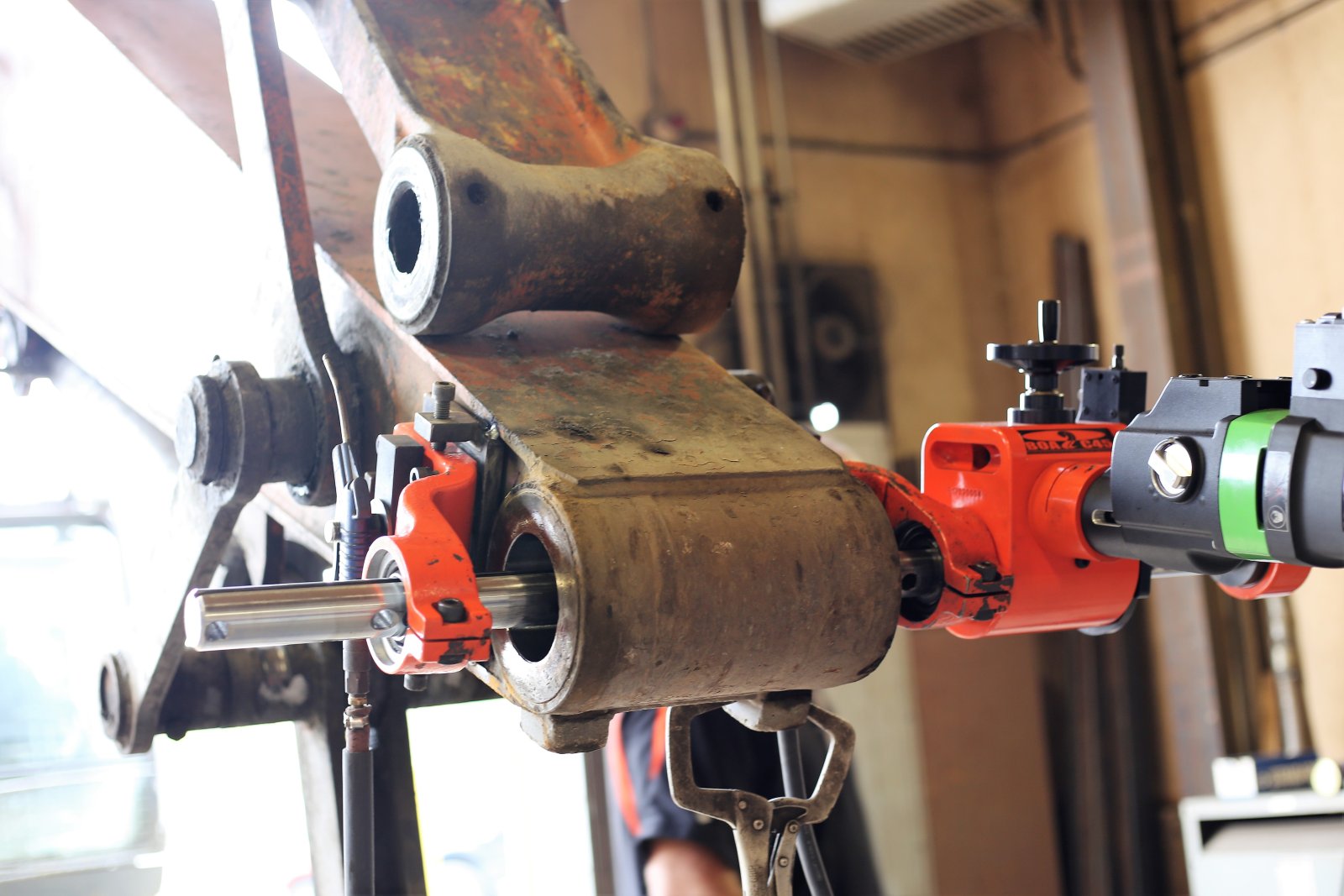
Once aligned, you must lock the machine into place. Spherical mounting bearings are essential for this stage. They allow for multi-axis adjustment, letting you fine-tune the bar's position without fighting the mounting brackets. This flexibility is vital when the mounting surface isn't perfectly perpendicular to the bore. When working on irregular surfaces like excavator buckets or worn pivot points, universal mounting brackets provide the necessary reach and stability. For the most secure, vibration-free operation, use tack-weldable mounting plates. These plates create a rock-solid connection to the workpiece that won't budge under heavy torque. It's often helpful to use bore welding accessories to build up a surface or create a clean mounting point before you begin the machining phase. A rigid setup ensures your line boring machine accessories can perform their job without interference, protecting your equipment and the client's assets.
Precision Measuring and Inspection Accessories
Measurement is the final authority in bore repair. You don't guess; you verify. High-quality line boring machine accessories in the inspection category provide the data needed to confirm your work meets OEM standards. Without precise measurement, you're just hoping the parts fit. In the field, where environmental factors like temperature and unstable mounting surfaces can interfere, having the right inspection tools is what ensures the job won't have to be redone. Reliable data is the only way to guarantee a permanent repair and maintain your professional reputation.
Measuring Tools for the Machine Shop and Field
Internal micrometers and dial bore gauges are the standard for any serious technician. For field use, dial bore gauges are often preferred because they're easier to read in low-light conditions and provide a direct visual of "out-of-round" or egg-shaped wear. You must measure at multiple points along the bore length to detect taper. A single measurement at the opening tells you nothing about what's happening six inches deep. Telescoping gauges are excellent for quick checks between machining passes to ensure you're approaching your target diameter safely. For high-volume repetitive repairs, "go/no-go" gauges streamline the process by providing an instant pass-fail result without the need for constant micrometer adjustments.
Alignment Verification Kits
Verification starts before the first chip is cut. Alignment verification kits ensure the boring bar sits perfectly parallel to the equipment's centerline. Using a "dummy" bar for initial setup allows you to test the mounting rigidity and alignment without risking your primary boring bar. In horizontal boring operations, precision levels are vital for ensuring the setup hasn't sagged under its own weight. Digital readouts (DRO) add another layer of certainty by providing real-time tracking of the tool's position. This reduces the risk of over-boring a critical seat and allows for faster, more confident machining.
Accuracy depends on calibration. Field conditions are brutal on sensitive instruments. Heat, dust, and vibration can throw off a micrometer in a single shift. Use calibration standards to reset your tools daily. This discipline ensures your measurements remain consistent from the first roughing pass to the final finishing cut. If you need to upgrade your inspection kit, explore the range of professional line boring machine accessories available for industrial field service. Precision isn't just a goal; it's a requirement for heavy equipment longevity.
The Complete Bore Repair System: Integration and Training
A successful repair isn't the result of a single tool. It's the outcome of a synchronized system where every component works in harmony. While individual line boring machine accessories solve specific mechanical hurdles, their true value is realized when they're integrated into a repeatable workflow. You need a setup that transitions from material buildup to final machining without requiring a total teardown. This system-thinking approach reduces downtime and ensures that every repair meets the same high standard of precision. When your equipment is engineered by Bore Repair Systems, Inc. for cross-compatibility, you eliminate the compatibility headaches that often plague field operations.
Synergy Between Boring and Welding
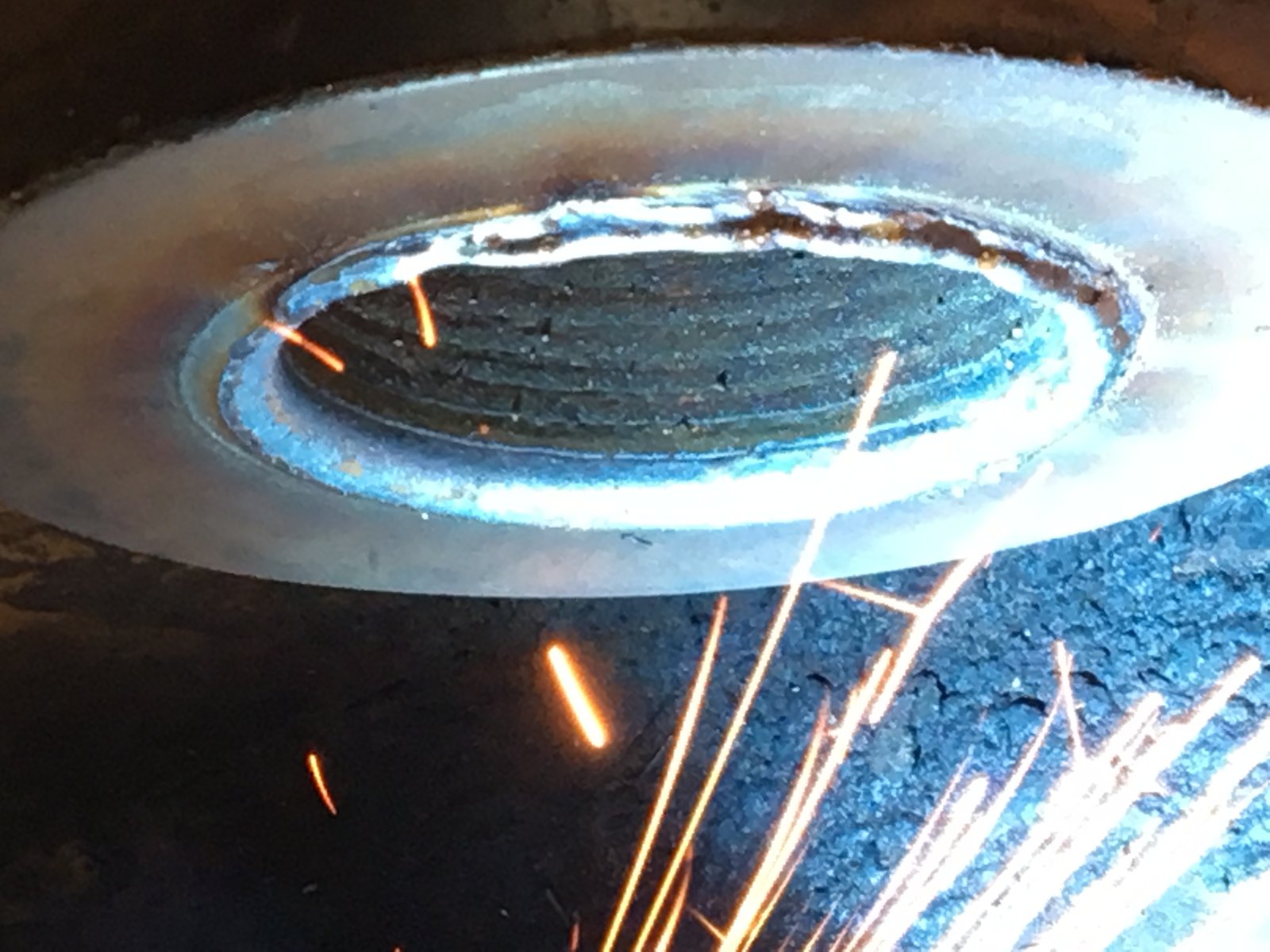
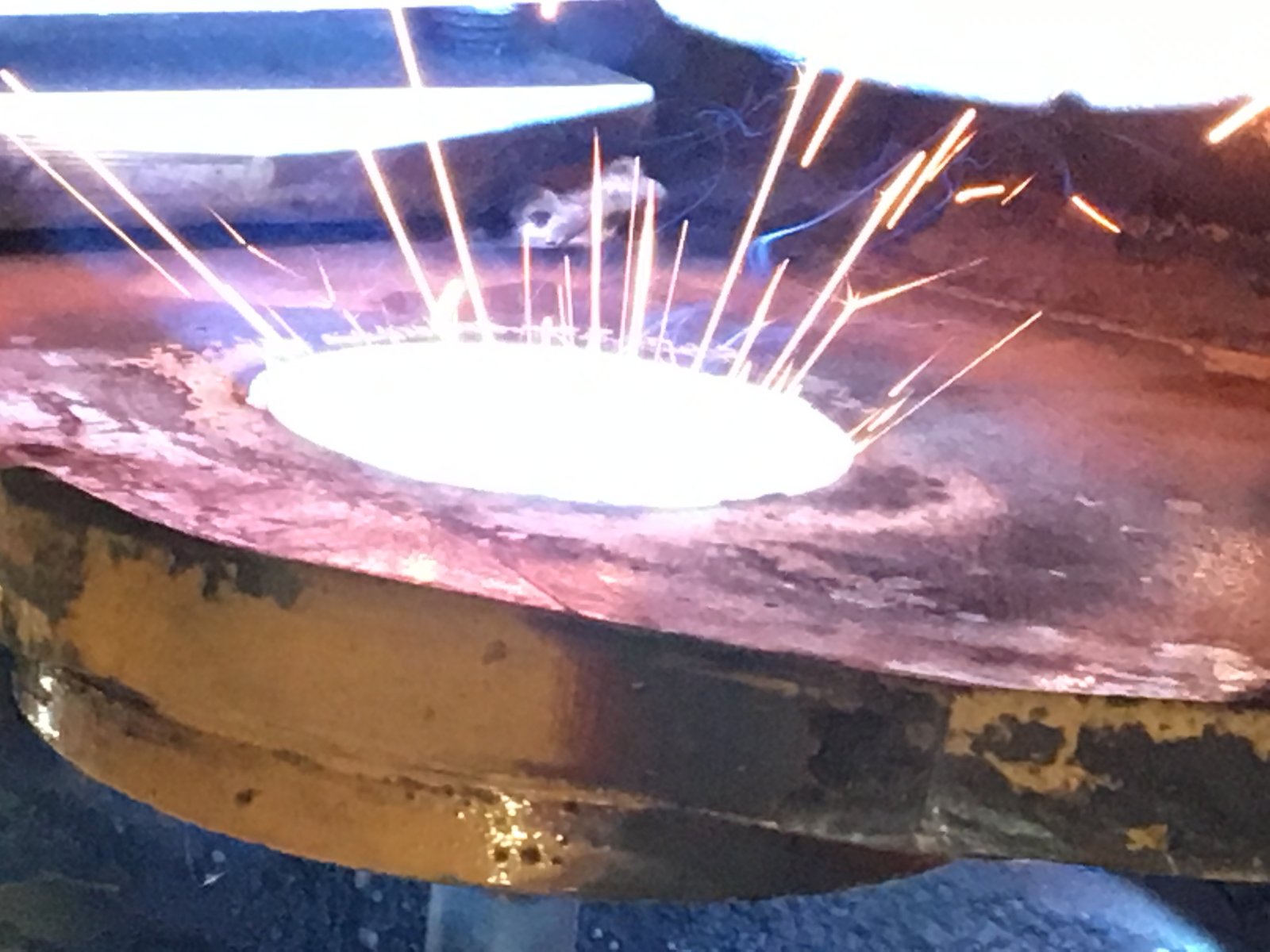
The relationship between welding and machining is the core of bore restoration. If you're looking for a bore welder for sale, consider how it will interface with your existing boring bars. Our accessories are designed so you can use the same mounting hardware for both the welding and boring phases. This allows you to weld the bore, swap the welder for the boring bar, and begin machining immediately. Automated welding accessories allow for precise material deposition, which means you spend less time boring away excess metal. It's a seamless cycle that preserves the integrity of the base metal while restoring the hole to its original dimensions.
Maximizing Your Investment Through Training
Even the most advanced line boring machine accessories are only as effective as the person operating them. Operator skill is the final variable in the precision equation. High-quality tooling can't compensate for a lack of foundational knowledge in setup or alignment. Professional training programs at Bore Repair Systems, Inc. bridge this gap by teaching technicians how to master complex accessory configurations. You'll learn to handle unique industrial challenges, such as boring in extreme angles or managing thermal expansion in large-diameter holes. Factory-direct training reduces the "trial and error" phase that often leads to broken bits or ruined bores.
Every job site presents its own set of obstacles. Sometimes, standard off-the-shelf components aren't enough. We provide custom accessory manufacturing to address those unique industrial challenges that don't fit a standard mold. Whether you're working in a deep-sea mining environment or a specialized manufacturing plant, having the right gear makes the difference. If you're ready to optimize your workflow or need advice on a specific repair scenario, contact us for a custom accessory consultation. We're here to ensure you have the tools and the knowledge to get the job done right the first time.
As industrial workflows evolve, many professionals are also looking into additive manufacturing to complement their traditional subtractive tools; you can discover 3D Printing Canada for insights into how high-quality printers are being integrated into modern workshops.
Elevate Your Field Machining Standards
High-precision bore restoration requires more than just a machine. It demands a complete ecosystem of reliable hardware. By selecting the right line boring machine accessories, you eliminate the guesswork that leads to rework and equipment failure. You've seen how core cutting tools, rigid mounting systems, and precision measuring instruments work together to achieve OEM-spec tolerances in the field. Integrating these tools with automated bore welding creates a seamless, professional workflow that protects your reputation and your profit margins.
Success in the field depends on the quality of your gear and the depth of your training. We provide American-made precision equipment backed by decades of patent-backed innovation to ensure your success. Our comprehensive operator training programs help your team master every setup with confidence. Don't settle for "close enough" when you can achieve absolute accuracy on every job. Explore our full range of professional line boring accessories and start optimizing your repair process today. You'll see the difference that professional-grade tooling makes on your next project.
Frequently Asked Questions
What are the most essential accessories for a new line boring machine?
The most essential components for a new setup include high-rigidity boring bars, centering cones for initial alignment, and spherical mounting bearings. You'll also need a variety of carbide inserts and tool holders to handle different metal grades. These items form the baseline for any professional field repair kit. Without these fundamental tools, your drive unit cannot perform the precision work required for industrial restoration.
How do I choose the right boring bar diameter for my specific job?
Select a boring bar diameter that maximizes rigidity while leaving enough clearance for the tool holder and efficient chip removal. A larger bar reduces deflection and chatter, which is critical for maintaining tight tolerances over long spans. Generally, you should use the largest bar that fits comfortably within the bore. If the bar is too small for the distance, it will flex and lead to inaccurate results.
Can I use accessories from different manufacturers on my line boring machine?
Many line boring machine accessories use industry-standard dimensions, but you must verify compatibility before starting a job. Differences in bar diameters or mounting bolt patterns can cause significant setup delays or even equipment damage. Using accessories engineered specifically for your system ensures a seamless fit and maintains the structural integrity of the machine. Mixing brands often requires custom adapters that can introduce unwanted play.
What is the best way to align a boring bar in an egg-shaped hole?
Use centering cones to establish an initial center point based on the least-worn areas of the bore. Once the cones are seated, verify the alignment using a dial indicator at multiple points along the axis. This process allows you to find the true centerline of the original hole rather than simply following the wear pattern. It's a pragmatic approach that ensures the restored bore is perfectly positioned.
How often should I replace my carbide tool inserts?
Replace carbide inserts as soon as you notice a change in chip color, an increase in vibration, or a dulling of the surface finish. Using a worn bit generates excessive heat, which can warp the boring bar and ruin the accuracy of your cut. In high-stakes environments, it's safer to swap inserts before they fail. Consistently sharp tooling is the only way to maintain OEM-spec finishes on every pass.
Do I need a bore welder to use line boring machine accessories effectively?
You don't need a bore welder to use these accessories, but the two systems are designed to work in synergy. A bore welder builds up the material so the boring machine can cut it back to original specifications. Without a welder, your repairs are limited to oversized machining or sleeve installations. Integrating both tools into your workflow allows for a complete restoration that standard machining alone cannot achieve.
What measuring tools are required to verify a finished bore?
Verifying a finished bore requires a high-quality dial bore gauge and an internal micrometer. These tools allow you to check for taper, out-of-roundness, and the final diameter with thousandth-of-an-inch precision. Always calibrate your instruments against a known standard before taking final measurements in the field. Reliable data from these tools is the only way to confirm that your repair meets the necessary industrial tolerances.
How do mounting bearings improve the accuracy of a portable line boring machine?
Spherical mounting bearings provide the rigidity needed to prevent the boring bar from vibrating or drifting during a cut. They also allow for multi-axis adjustment, making it easier to align the bar on irregular or uneven surfaces. By isolating the bar from machine vibration and providing a stable pivot point, these line boring machine accessories significantly improve the consistency and precision of every field repair.
Comments