

Investing in Training: ROI for Heavy Equipment Repair Teams

Updated: Sep 1
A single alignment error during a repair can instantly turn a $50,000 casting into scrap metal. It's a high-stakes reality that makes many maintenance managers hesitate to invest in line boring training for their teams. You already understand that every hour a loader or excavator sits idle represents a direct hit to your bottom line. Relying on outside contractors often means waiting weeks for a specialist and paying a premium for their expertise. The fear of damaging expensive machinery through improper machining is a legitimate hurdle, but it shouldn't stop your progress.
Professional line boring training removes that uncertainty and transforms your crew into a precision repair powerhouse. By mastering the right techniques, your technicians can achieve factory-spec tolerances directly in the field. This article explores how structured training pays for itself by reducing equipment downtime and extending the lifespan of your heavy machinery. We'll look at the specific skills that bridge the gap between owning a machine and actually getting professional results every time.
Table of Contents
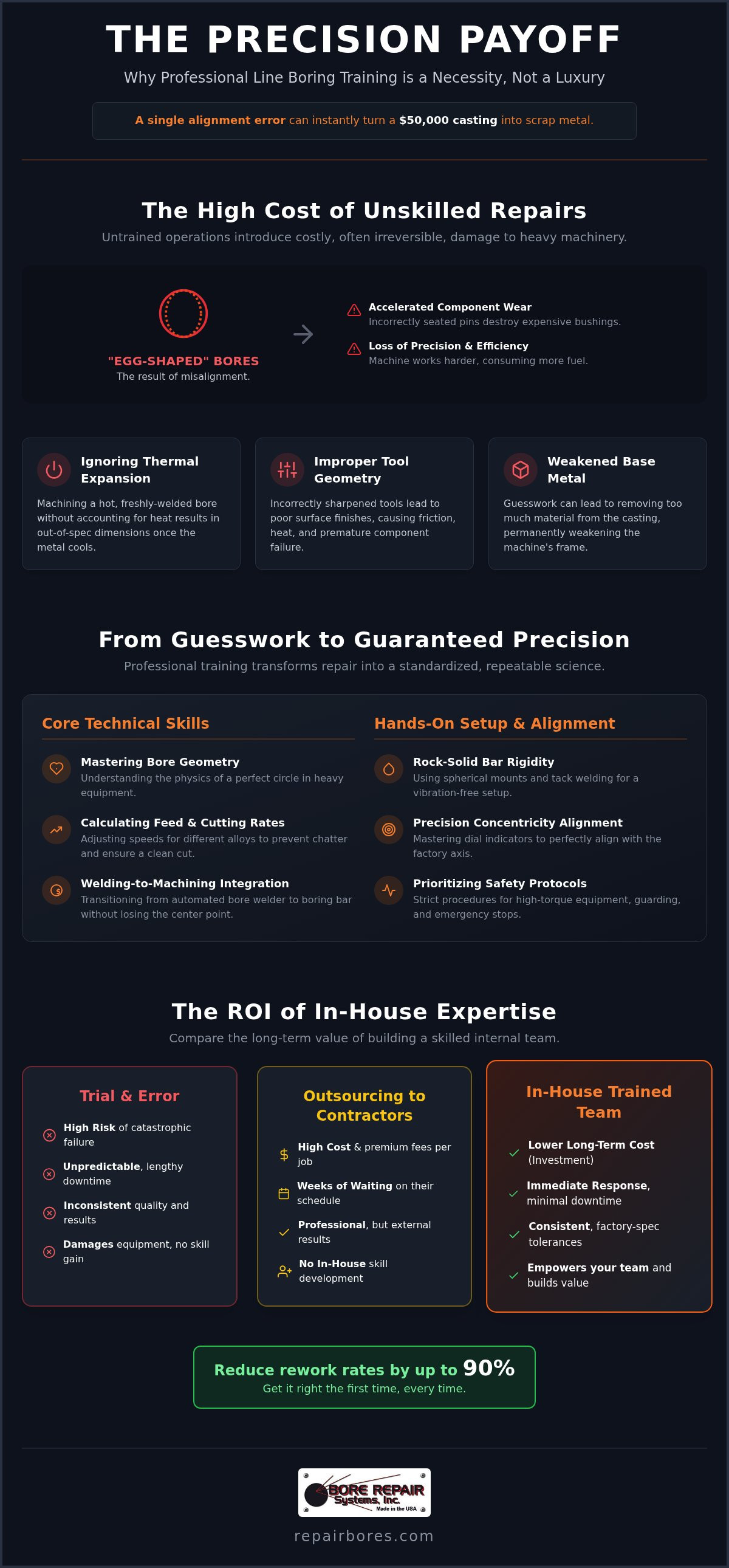
The High Cost of Unskilled Bore Repair Operations
Unskilled repairs are a financial gamble. When an operator lacks formal Boring (manufacturing) knowledge, they often produce "egg-shaped" holes. These misaligned bores prevent pins from seating correctly, which leads to accelerated wear on expensive bushings and pins. For an excavator, this means a loss of precision and increased fuel consumption as the equipment works harder to compensate for the friction. You aren't just losing time; you're losing the mechanical efficiency of your entire machine.
A manual is a starting point, but it's never a substitute for hands-on technical instruction. Reading about a setup isn't the same as centering a bar in a worn-out pivot point. Trial and error in the field is expensive. One bad cut can ruin a casting worth tens of thousands of dollars. The hidden costs of guesswork also include the structural integrity of your fleet. When a technician takes too much material off the base metal, they weaken the frame and make future repairs more difficult. Professional line boring training provides the technical foundation to avoid these permanent mistakes.
Common Errors in Untrained Line Boring
Technicians without formal instruction often struggle with tool geometry. Incorrect tool sharpening leads to poor surface finishes that cause premature component failure. Another frequent mistake is ignoring thermal expansion. If you weld a bore and immediately start machining without accounting for heat, the final dimensions will be off once the metal cools. Misalignment across multiple pivot points is also a major risk. If the bar isn't perfectly straight across the entire frame, the machine will never track or dig correctly again. These errors turn a routine maintenance task into a logistical nightmare.
The ROI of Precision Training
Investing in your team's skills delivers immediate financial returns. Standardized setup procedures can reduce rework rates by up to 90%. Instead of doing the job twice, your crew gets it right the first time. This proficiency directly decreases machine downtime, allowing your equipment to return to the dirt faster to earn revenue. Proper instruction also ensures your team knows how to maintain and extend the life of professional bore welder systems. When operators understand the technical nuances of line boring training, they treat the equipment with the respect precision tools deserve. This prevents avoidable breakages and keeps your operational overhead low.
Core Curriculum of Professional Line Boring Training
Professional line boring training isn't just about turning a machine on. It's about understanding the physics of metal and the geometry of a perfect circle. A comprehensive program, much like a Diesel and Heavy Equipment certificate program, focuses on the technical precision required for field repairs. Operators must master the relationship between feed rates and cutting speeds across various alloys. Harder steels, like those found in bucket ears, require slower speeds and specific tool geometries to prevent chatter. Safety is the foundation of every lesson. High-torque portable machining equipment demands strict protocols for machine guarding, cable management, and emergency stops. You don't want a technician learning these lessons through a workplace accident.
Mechanical Setup and Alignment Techniques
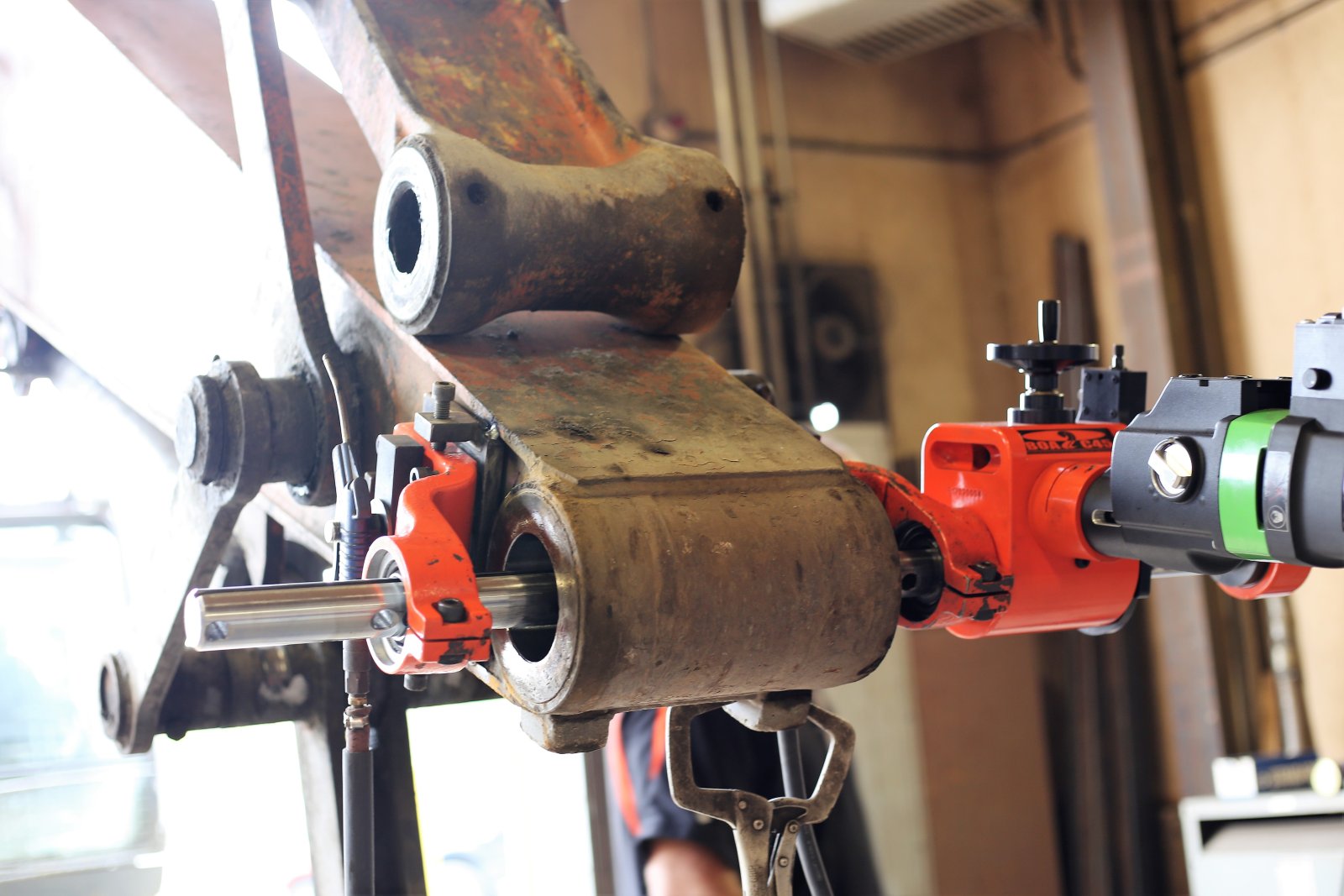
Rigidity is everything in line boring. Training teaches technicians to use spherical mounts and tack welding to provide a rock-solid support system for the boring bar. Without a rigid setup, vibration will ruin the surface finish and destroy your tolerances. Centering the bar requires advanced dial indicator techniques to ensure concentricity before the first cut. Concentricity in heavy equipment bores refers to the exact alignment of the bore's center point with the original factory axis of the pivot point. A technician must know how to read the indicator and adjust the mountings in small, precise increments to prevent "dog-tracking" issues in the machinery.
Advanced Machining and Welding Integration
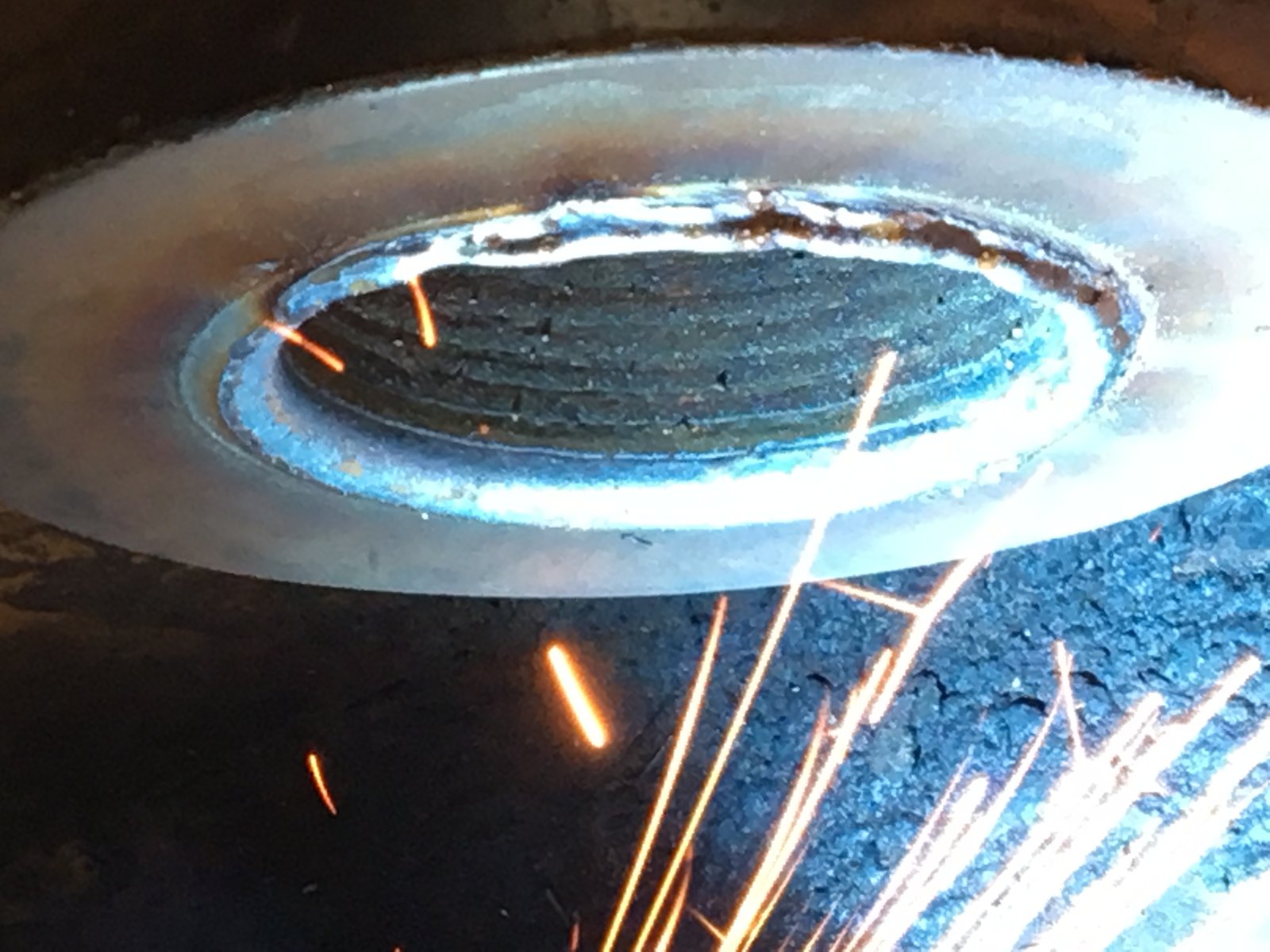
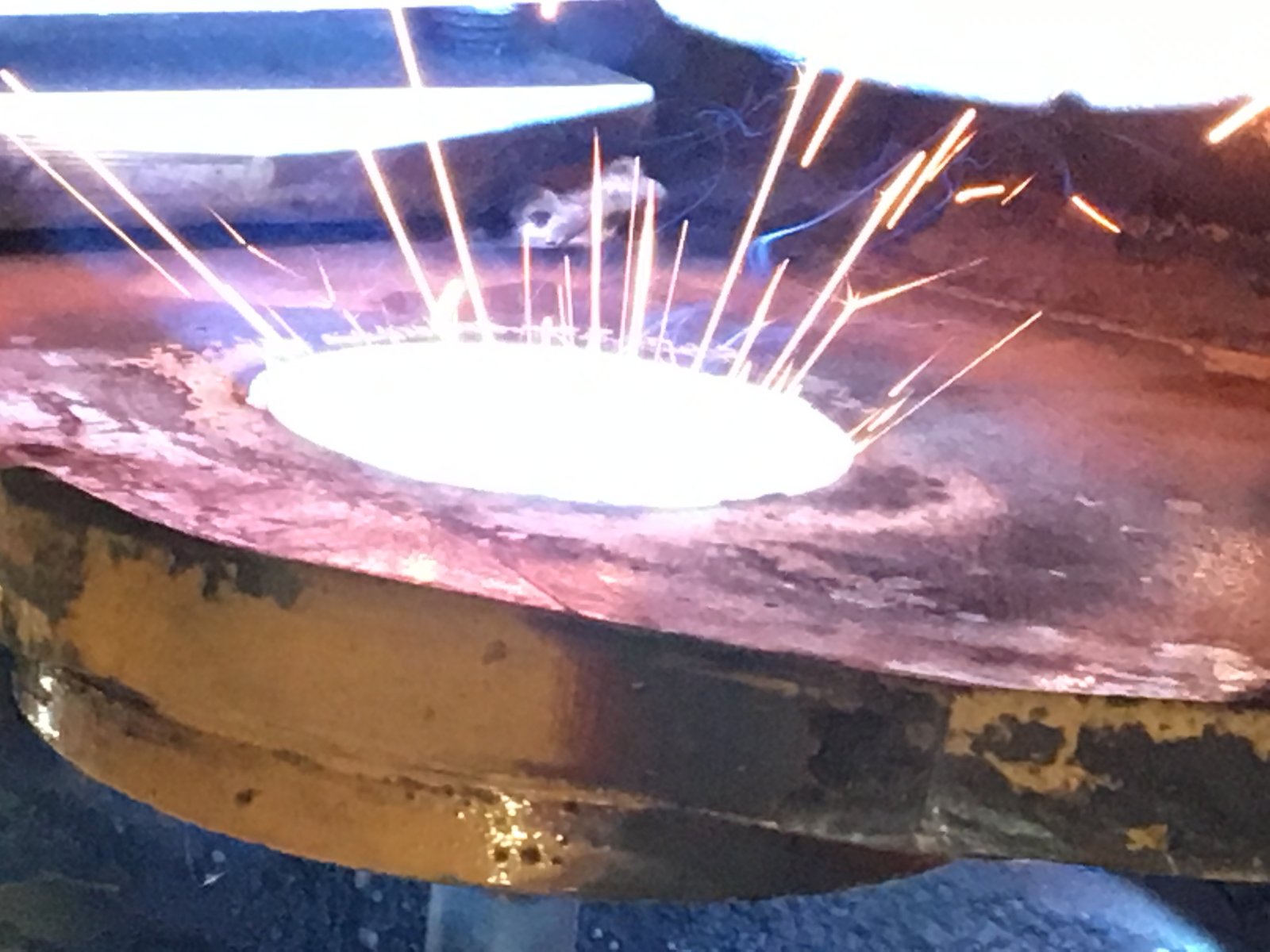
The most critical phase of a repair is the transition from welding to machining. Line boring training emphasizes how to move from an automated bore welder to the boring bar without losing your established center point. This process ensures the new metal is perfectly concentric with the rest of the frame. Technicians also learn to manage chip evacuation in blind or deep bores. Clogged chips can score the new surface or bind the tool, leading to costly downtime. The goal is always to achieve interference fit tolerances. This ensures that new bushings press in with the correct amount of force, providing a repair that lasts as long as the original factory build.
Training ensures your team can handle these specific challenges:
Precise tool sharpening for various metallurgical requirements.
Calculated chip load and surface feet per minute (SFM) settings.
Proper cooling and lubrication strategies for deep machining.
Mastering these steps turns a complicated repair into a predictable, routine task. If you want to see how these tools work together, explore our line boring and bore welding systems.
Case Study: In-House Training vs. Trial-and-Error
Many maintenance teams operate in a reactive loop. They fix the same worn pivot points every few months because the initial repair wasn't precise. One fleet maintenance team faced this exact challenge: recurring pivot pin failures on their primary loaders. Their existing approach relied on manual "slugging"-a process of hand-filling bores with weld and grinding them back to a rough shape. This method was inconsistent, slow, and physically demanding. By transitioning to a structured line boring training program, they replaced guesswork with a repeatable, industrial-grade process that treated the machine frame with the respect it deserved.
The 'Before' Scenario: Inconsistent Repairs
Before the training, the team lost dozens of hours to manual grinding and welding. Manual repairs rarely result in a perfectly round bore, leading to "point loading" where the pin only touches a small part of the surface. This creates extreme stress, causing pins to snap or bores to ovalize again within weeks. Safety was a constant concern; a poorly fitted pin in a high-stress joint is a disaster waiting to happen. The team documented a 30% "do-over" rate, meaning nearly one out of every three repairs had to be pulled back into the shop for corrections. This trial-and-error approach wasn't just frustrating; it was bleeding the company's maintenance budget dry and keeping critical machines out of the dirt.
The 'After' Scenario: Standardized Excellence
The solution involved implementing line boring operator training alongside automated bore repair systems. The results were immediate and measurable. By following a standardized checklist for centering and machining, the team achieved a 40% reduction in total repair time. More importantly, they reached a 100% pass rate on quality control inspections. The automated welder ensured even heat distribution, while the line boring machine cut the new metal to factory-spec tolerances. They no longer had to "make it fit" with a sledgehammer; the pins slid in perfectly every time.
This shift provided long-term durability gains for their mining and construction equipment. Beyond the numbers, there was a psychological shift. The crew stopped seeing themselves as "fixers" chasing a problem and began operating as precision machinists. They took pride in the mechanical integrity of their work. This transition from reactive patching to proactive, precision repair is the ultimate ROI of professional line boring training. It turned a bottleneck in their shop into a core competency that saved the company thousands in outsourced labor and replacement parts.
Evaluating Training Programs for Maintenance Teams
Not all instruction is equal. When you evaluate a provider, look for line boring training that prioritizes hands-on time with heavy equipment components. You don't want your team practicing on small aluminum blocks in a clean classroom. They need to work on actual excavator buckets, loader frames, and articulated joints. The instructor must have real-world field experience. Shop theory is fine, but it doesn't prepare a technician for the variables of a job site. Ask about their history in the dirt. A veteran who has seen every possible failure is the only one who can teach your team how to fix them.
A unified curriculum is essential. Bore welding and line boring are two halves of the same process. If a program treats them as separate subjects, your team will struggle to integrate the two in the field. The training must also cover line boring machine maintenance. Protecting your investment means teaching operators how to clean, lubricate, and calibrate the equipment. A technician who neglects the machine will eventually produce inaccurate bores, regardless of their machining skill. This technical foundation ensures your gear stays in the field and out of the repair shop.
Questions to Ask a Training Provider
Don't sign a check until you know what you're getting. Start by asking if they provide training on your specific equipment models. Generic line boring training often misses the nuances of high-torque portable systems. Ask about competency sign-offs. You need a formal record that your operators have mastered the safety and precision protocols. Finally, verify what post-training technical support is available. The real learning often happens during the first solo repair, and your team will need a lifeline when they hit a unique mechanical hurdle.
On-Site vs. Factory Training
On-site training is the ultimate test of your shop's workflow. It uses your power sources, your lifting equipment, and your specific mechanical challenges. It's practical and efficient. Factory training, however, offers a distraction-free environment. It pulls technicians away from the daily "fires" of the shop so they can focus on high-intensity learning. To prepare your team for either option, clear their schedules. Precision machining requires 100% focus. If you're ready to upgrade your team's capabilities, view our line boring and bore welding training services.
Mastering the Machine with Bore Repair Systems Training
At Bore Repair Systems, Inc., our philosophy is built on a single truth: simple tools solve complex industrial problems best. We strip away the unnecessary fluff and focus on mechanical integrity. This approach is the foundation of our line boring training. We don't just sell you a machine and walk away. We provide direct access to the engineers and experts who design and build these systems. This isn't a classroom lecture from someone who hasn't seen a job site in a decade. It's a deep dive into the practical application of precision machining on the world's toughest iron. You'll learn how to maximize the utility of your line boring machine accessories to ensure every setup is rigid and every cut is true.
What to Expect from Our Program
Expect a program that respects your time and your intelligence. We guide your team through a methodical process from initial bore inspection to the final pass. You'll learn to identify the subtle signs of component wear and how to correct them before the first chip falls. We focus heavily on practical troubleshooting. If you hit a hard spot in a weld or deal with a blind bore in a tight corner, you'll already know the solution. We emphasize operational speed, but never at the expense of safety or precision. By the end of the session, your operators will have the confidence to tackle high-torque machining tasks without hesitation.
Schedule Your Training Session
Taking control of your repair timeline is the fastest way to improve your bottom line. When your team masters line boring training, you effectively eliminate the wait times associated with third-party contractors. You keep the expertise and the profit inside your own shop. This transition turns your maintenance department from a cost center into a strategic advantage. Your machines stay in the dirt longer because your repairs are built to last. It's time to stop guessing and start machining with factory-level precision. Contact Bore Repair Systems, Inc. today to discuss a custom training plan. Let's get your crew the skills they need to keep your fleet moving.
Take Control of Your Fleet Maintenance
Precision repair is the difference between a machine that returns to work and one that returns to the shop. By eliminating the high costs of trial-and-error machining, your team can finally achieve factory-spec results in the field. Structured line boring training provides the technical foundation to stop guessing and start delivering repeatable precision. You'll reduce downtime, extend the lifespan of your heavy equipment, and keep the profits of specialized repair in-house.
Bore Repair Systems offers expert instruction directly from the manufacturer of automated bore welders. With decades of industrial machining expertise, we focus on practical, field-ready skills that solve real-world mechanical hurdles. Don't let your fleet be held hostage by contractor schedules or inconsistent repairs. Empower your crew with the right tools and the knowledge to use them correctly. It's an investment that pays for itself through increased machine availability and mechanical reliability.
Schedule your professional line boring training with the experts at Bore Repair Systems and start seeing the ROI of a precision-trained maintenance team today. Your equipment is built to work; make sure your repairs are built to last.
Frequently Asked Questions
How long does a typical line boring training course take?
A typical training session usually lasts between two to five days depending on your team's current skill level and specific goals. This timeframe allows for a full progression from initial machine setup to final precision cuts on actual heavy equipment components. It's an intensive, hands-on experience designed to move technicians from theory to independent field repairs quickly and efficiently.
Do we need prior machining experience to attend line boring training?
You don't need to be a master machinist to attend line boring training, but a solid foundation in mechanical aptitude is essential. Our instructors guide technicians through the fundamentals of tool geometry, alignment, and feed rates from the ground up. This approach ensures that even those new to portable machining can achieve factory-spec results by the end of the program.
Can you provide training on-site at our facility?
Yes, we provide comprehensive on-site training sessions at your facility to work directly with your team and your specific equipment. Learning in your own shop environment allows your technicians to troubleshoot real-world challenges using the power sources and lifting gear they use every day. This eliminates the gap between a classroom setting and the reality of your daily maintenance operations.
Is bore welding training included with the line boring course?
We offer integrated programs that cover both bore welding and line boring as a unified repair system. Since these two processes are interdependent, learning them together ensures your team can manage the entire repair cycle from adding metal to final machining. This holistic approach is the most effective way to ensure your repairs achieve a perfect, long-lasting interference fit.
What equipment do I need to have ready for a training session?
You should have your line boring machine, bore welder, and a suitable heavy equipment component, such as a bucket or loader arm, ready for the hands-on portion. It's also necessary to have your standard shop tools, power supply, and all required safety gear available. Using your actual equipment during the session ensures your team is comfortable with the exact tools they will use daily.
Do you offer training for all brands of line boring machines?
Our training focuses on the universal principles of precision boring and automated welding, which apply to most professional-grade portable systems. While we specialize in the equipment we manufacture, the foundational skills of alignment, centering, and tool geometry are transferable across the industry. We ensure your operators understand the core mechanics regardless of the specific machine brand in your shop.
Will my team receive a certificate upon completion of the training?
Operators receive a formal record of completion that documents their competency in machine setup, safety protocols, and precision boring techniques. This certificate serves as a benchmark for your maintenance department's internal quality standards and provides a record of professional development. It gives managers the assurance that their technicians have been trained by experts to handle high-stakes machining tasks accurately.
How often should operators undergo refresher training for bore repair?
Most industry professionals recommend a refresher session every two to three years or whenever you introduce new technology to your repair fleet. Regular updates help technicians stay current on the latest machining techniques and evolving safety standards. It's also a good opportunity to review line boring training fundamentals to prevent the "skill creep" that can lead to inconsistent repair results over time.
Comments