

Advanced Bore Welding Techniques Training: Mastering Precision Repair in 2026

Updated: Sep 1
A failed manual weld doesn't just waste wire; it steals hours of shop time and destroys profit margins on heavy equipment repairs. You've likely felt the frustration of a "hard spot" ruining a fresh carbide insert or spent a full shift trying to fix a bore that isn't concentric. These inconsistencies lead to equipment downtime that your customers won't tolerate. Transitioning from manual methods to complex automated systems can feel like a steep climb for any team, but it's the only way to stay competitive in a high-demand market.
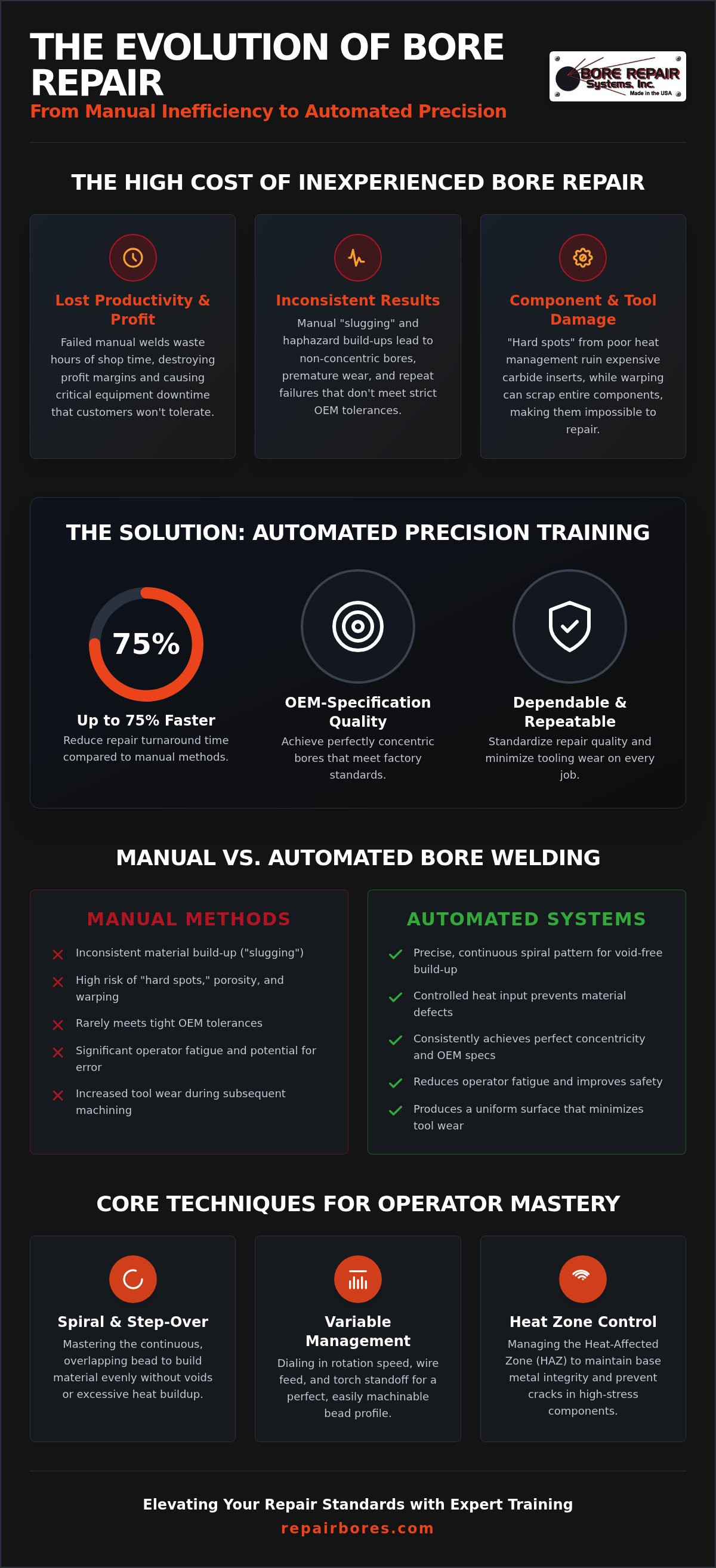
Our advanced bore welding techniques training is designed to turn that complexity into a repeatable, high-precision process. By mastering automated workflows and aligning with the AWS B2.1/B2.1M:2026 standards, operators can reduce repair turnaround times by up to 75 percent. This article previews how expert-led instruction ensures perfectly concentric bores, minimizes tooling wear during line boring, and helps your staff meet OEM specifications every time. We'll examine the technical precision required to master these systems so your shop stays productive and your repairs stay dependable.
Table of Contents
Why Advanced Training is Essential for Modern Bore Repair
The industry has moved beyond the days of manual "slugging" or haphazard build-ups. Maintenance teams now face tighter tolerances and more complex alloys that don't forgive mistakes. Relying on basic skills often leads to inconsistent results, which translates directly to lost revenue. Investing in advanced bore welding techniques training isn't just about learning new buttons on a machine; it's about mastering the technical variables that keep heavy equipment in the field longer. While a technician might understand fundamental welding processes, applying those principles to a confined, circular bore requires a specific set of automated skills.
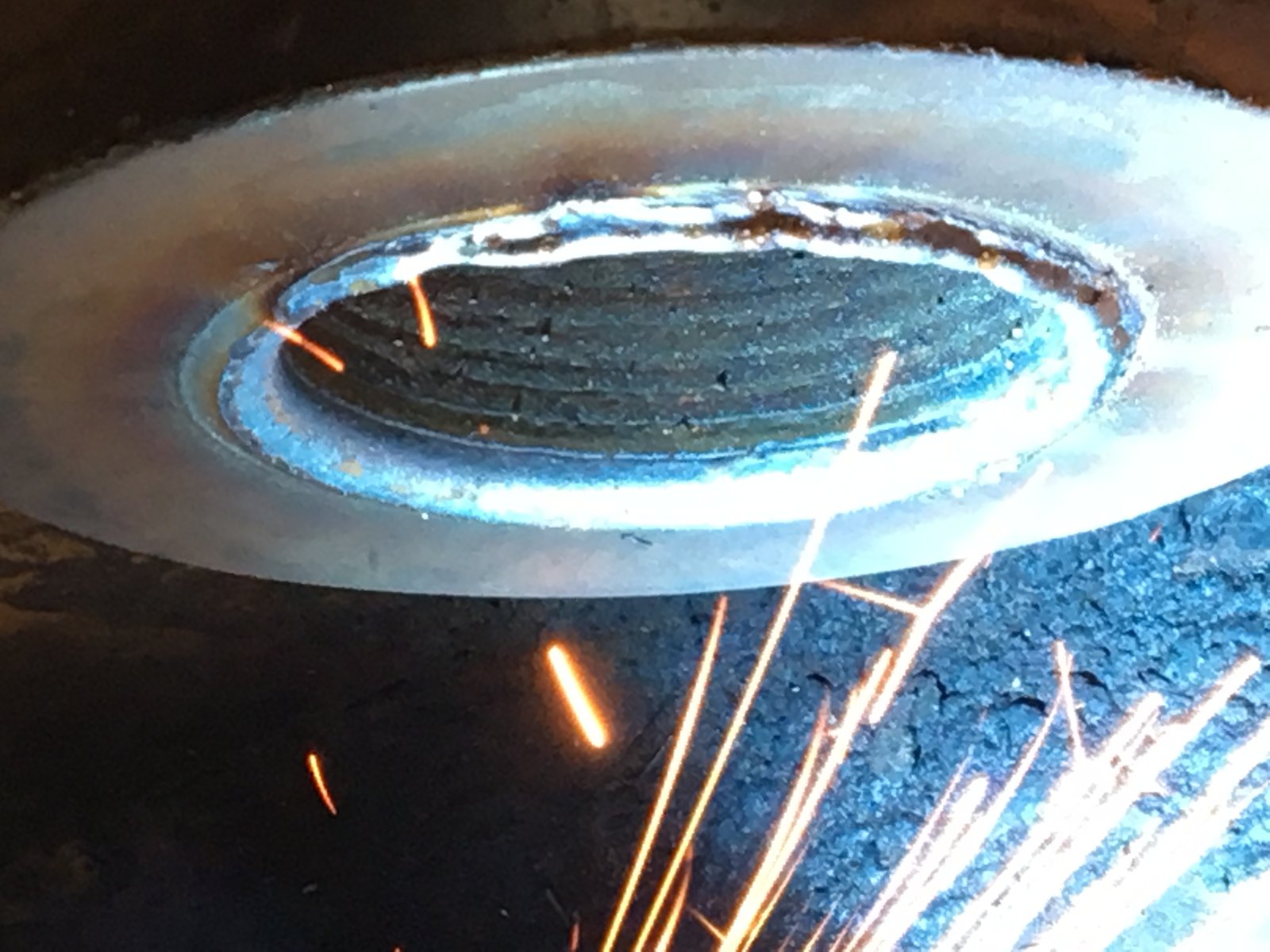
Professional training provides an immediate return on investment by eliminating the trial and error that plagues many shops. Automated bore welders can reduce repair time by 50 to 75 percent compared to manual methods, but only if the operator knows how to dial in the equipment. Expert instruction teaches operators how to prevent common failures like porosity or "hard spots." Hard spots occur when cooling rates aren't managed correctly, creating brittle areas that can shatter expensive carbide inserts during the subsequent line boring process. Proper training ensures the metallurgy remains consistent, extending the service life of high-value machinery.
The High Cost of Inexperienced Bore Repair
Failed repairs don't just require a do-over; they often result in scrapped housings or structural components. When an operator lacks the specific training to manage heat input, they risk warping the entire component. This warping makes it impossible to return the bore to factory specifications. Downtime is the real killer in heavy industry. Every hour a machine sits in the shop because a weld bead was inconsistent is an hour of lost production. Manual rebuilds rarely meet the strict OEM tolerances required for modern high-load pins and bushings, leading to premature wear and repeat failures.
Bridging the Skill Gap in Field Service
Standardizing repair quality across a national maintenance fleet is a significant challenge for many managers. Advanced bore welding techniques training provides a unified workflow that ensures every technician produces the same high-quality results. This consistency is vital for safety and compliance in high-stakes industrial environments. Beyond the technical output, mastering automated systems significantly reduces operator fatigue. A technician who isn't struggling with a manual torch in a cramped space is more alert and less prone to making safety errors. Professional training turns the complex task of bore repair into a straightforward, repeatable process that protects both the equipment and the staff.
Core Advanced Bore Welding Techniques Every Operator Needs
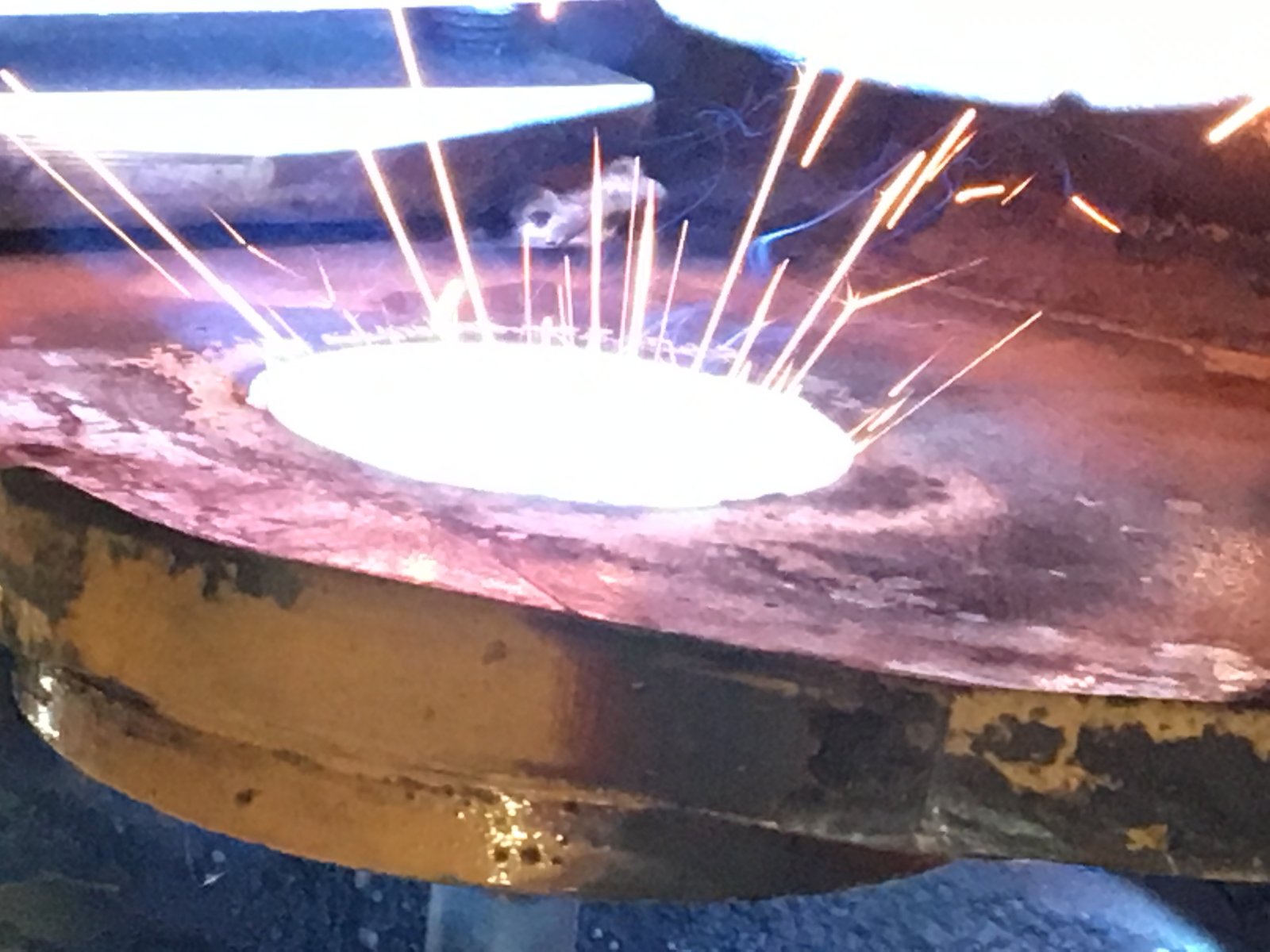
Mastering the spiral pattern is the first step in moving from a general welder to a precision machinist. Unlike traditional flat-plate welding, bore repair requires a continuous, overlapping bead that builds material evenly across a circular interior. This is where advanced bore welding techniques training becomes indispensable. Operators must learn to calculate the perfect step-over adjustment. If the torch advances too quickly, you get "valleys" or voids between beads. If it moves too slowly, you risk excessive heat buildup and potential warping.
Gravity is another variable that manual training rarely addresses. Vertical bores require different voltage and wire speed settings compared to horizontal ones to prevent the molten puddle from sagging. Managing the heat-affected zone (HAZ) is equally critical. In high-stress pivot points, excessive heat can change the base metal's properties, leading to cracks. By following standards set by the American Welding Society (AWS), technicians can ensure their repairs maintain structural integrity.
Automated Spiral Welding Precision
Precision relies on three variables: rotation speed, wire feed speed, and torch standoff. Setting the correct rotation speed ensures the bead profile remains flat and easy to machine. As the bore diameter increases, these settings must be adjusted proportionally. Expert training teaches operators how to read the puddle in real-time and make these micro-adjustments. Consistent standoff distance is non-negotiable. Even a slight variation can cause arc instability and porosity, which ruins the finish during the machining stage.
Techniques for Non-Standard Bore Shapes
Not every hole is perfectly round. Many field repairs involve "egg-shaped" or oblong wear patterns caused by years of mechanical stress. Technicians need to know when to use intermittent welding to build up specific low spots before starting a full spiral pass. Handling blind holes or shoulder repairs requires specialized torch angles to ensure full penetration without sticking the nozzle. Learning these nuances is what separates a basic operator from a master. For those looking to upgrade their shop's capabilities, exploring professional bore welding training is the most direct path to consistent results.
Comparing Training Pathways: Manual vs. Automated Systems
General welding certifications provide a solid foundation for structural work, but they often fall short when applied to precision bore repair. While following American Welding Society training standards is necessary for any professional shop, the specific physics of interior diameter welding requires a specialized approach. Manual stick welding inside a bore is a grueling process. It demands high levels of dexterity and constant repositioning. In contrast, advanced bore welding techniques training focuses on the setup and control of automated systems that remove human variability from the equation.
The learning curve for these systems is different, not necessarily harder. A veteran welder might struggle to maintain a perfect bead manually for eight hours, but they can learn to program an automated welder in a fraction of that time. Consistency is the primary differentiator. A machine-controlled spiral weld produces a uniform surface that is ready for machining. Human-led beads often result in "highs and lows" that force the line boring machine to work harder, increasing tool wear and extending the job time. Investing in a bore welder for sale allows a shop to standardize its output, regardless of which technician is on the clock.
The Accuracy Advantage of Automation
Automation eliminates the "low spots" that often force a technician to restart a welding pass. By maintaining a constant travel speed and wire feed, an automated system ensures the material buildup is exactly what the job requires. This precision reduces the number of passes needed to reach the target diameter. It also improves the metallurgical bond. Controlled heat input prevents the base metal from reaching temperatures that cause grain growth or brittleness. You get a repair that is structurally sound and easy to machine back to OEM specs.
Economic Impact of Training on Maintenance Teams
Structured training lowers the technical barrier for new hires, allowing them to contribute to high-precision tasks sooner. It also reduces consumable waste. When an operator knows exactly how to set their step-over and wire speed, they don't waste pounds of expensive wire on failed attempts or excessive buildup. This efficiency has a direct impact on the bottom line. For shop managers, understanding the ROI for heavy equipment repair teams is essential when justifying equipment and training expenses. advanced bore welding techniques training transforms the repair shop from a bottleneck into a high-throughput profit center.
What to Look for in a Professional Bore Welding Training Program
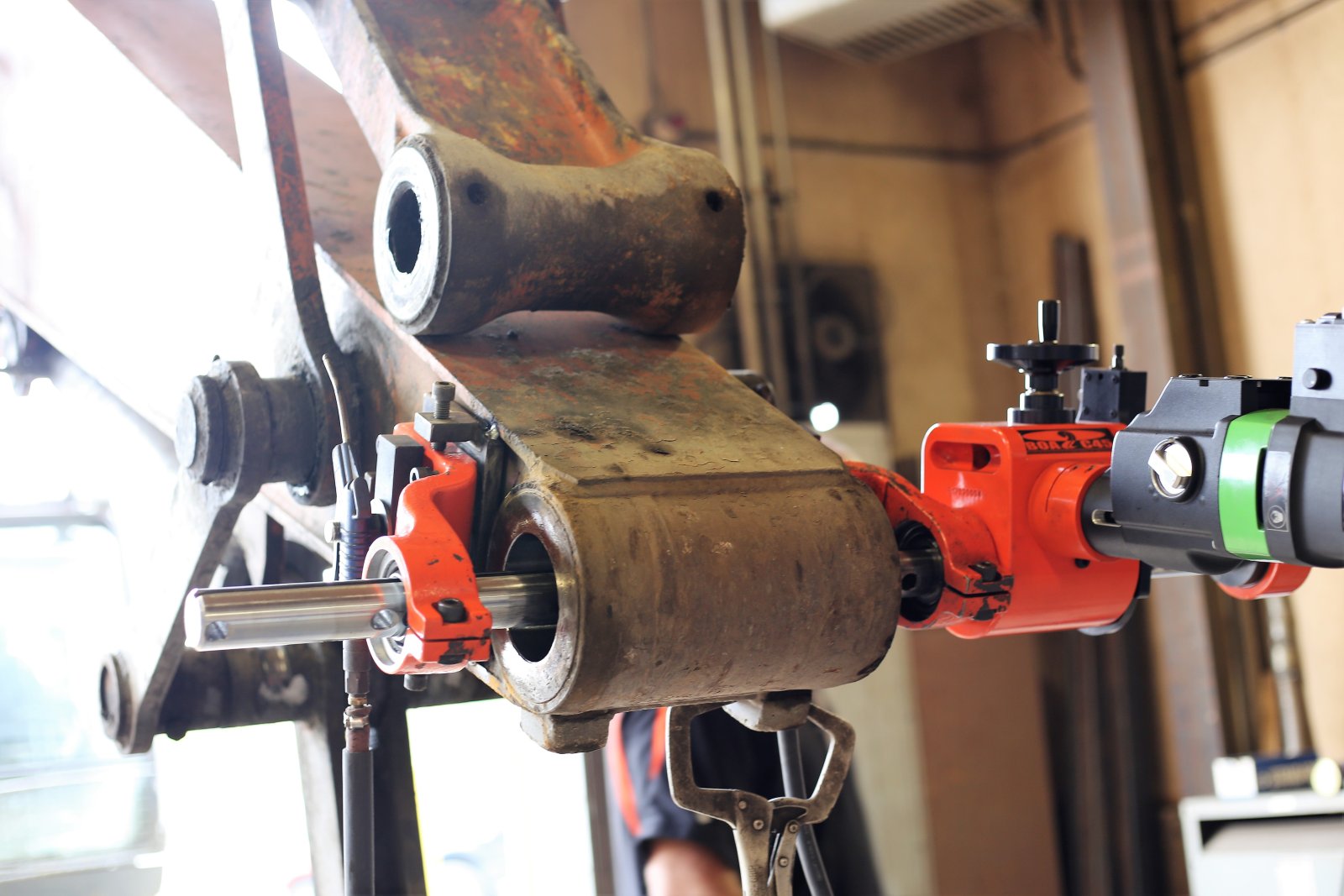
Selecting a program isn't just about finding a classroom. You need a curriculum that mirrors the grit of the field. A general 180-hour welding course might teach you how to lay a bead on a flat plate, but it won't prepare you for the variables of a worn pivot point on a 980 loader. Look for advanced bore welding techniques training that prioritizes hands-on time with the actual hardware you'll use. This means spending hours with portable bore welders and line boring machines until the setup feels like second nature. If you aren't getting grease on your hands during the course, you aren't getting the right instruction.
Effective instruction must come from technicians who've spent decades in the dirt. You want a mentor who understands why a weld might fail in sub-zero temperatures or how to troubleshoot a control box in a remote mining site. If the instructor hasn't lived the field service life, they can't teach you the shortcuts that save time without sacrificing quality. Field repairs mean you are often your own mechanic. Your training should include equipment maintenance and troubleshooting so you can stay productive when you're miles from the nearest tool store.
Curriculum Essentials: Beyond the Torch
A complete program covers more than just the arc. It starts with bore preparation. If you don't remove every trace of grease and oxidation, your buildup will fail before you even start machining. The curriculum should also emphasize the relationship between the weld and the final cut. Mastering line boring operator training is the only way to ensure your welding efforts aren't wasted. You must also understand the metallurgy of different heavy equipment steels. Welding on a high-strength steel frame requires different pre-heat and cooling protocols than a standard cast housing. Knowing these differences prevents structural cracks later.
Flexible Training Formats for Busy Shops
Downtime is expensive. Look for training that fits your operational schedule. On-site training is often the most efficient choice for large fleets. It allows your team to learn on their own equipment in their own shop environment. Manufacturer-direct training is another high-value option. It ensures your staff masters the specific nuances of your bore repair systems without any "lost in translation" moments from third-party instructors. Finally, ensure the program offers post-training support. When a technician is stuck on a difficult shoulder repair six months later, having a technical resource to call is invaluable. Ready to eliminate the guesswork and start restoring bores to factory specs? Contact us to schedule your professional bore welding training.
Bore Repair Systems Training: Elevating Your Repair Standards
Precision isn't an accident. It's the result of a deliberate, engineered process. At Bore Repair Systems, Inc., we don't just manufacture hardware; we provide the expertise required to use it at a professional level. Our advanced bore welding techniques training programs are designed by the same American engineers who build our equipment. This direct connection between the designer and the operator ensures your team isn't just following a manual. They're learning the mechanical logic behind every weld bead and every machining pass. We focus on delivering results that meet or exceed OEM specifications using durable, American-made systems that are built for the grit of the field.
Getting started with a customized program is straightforward. We evaluate your team's current skill level and the specific types of equipment you maintain. Whether you're working on heavy construction machinery, mining assets, or power generation components, we tailor the instruction to your reality. This isn't a generic welding class. It's a specialized masterclass in restoring mechanical integrity to high-value assets. By the end of the program, your operators will have the confidence to tackle complex repairs that previously required expensive outside contractors.
Mastering the Full Repair Cycle
A successful repair starts long before the arc is struck. Our training guides your team through the entire cycle, beginning with precise initial measurements and bore evaluation. You'll learn how to identify the correct buildup required and how to set up for a perfectly concentric finish. We also cover the use of specialized line boring machine accessories to handle non-standard setups and complex geometries. This integrated approach ensures that the welding phase and the machining phase work in harmony. When your operators understand how the weld bead affects the final cut, they produce better work with less tool wear and zero rework.
The Advantage of Manufacturer-Direct Education
Online micro-credentials can't replace the value of hands-on, manufacturer-direct instruction. When you train with us, you gain direct access to the latest technique improvements and patented features of our automated systems. We ensure your team knows every feature of their equipment, from fine-tuning the step-over to troubleshooting electrical connections in remote locations. This depth of knowledge is what allows a shop to maintain high throughput without sacrificing quality. You don't have to guess which settings work best; we give you the proven data. Contact Bore Repair Systems today for expert training solutions that turn your maintenance department into a precision repair center.
Secure the Future of Your Repair Shop
Mastering the transition from manual repairs to automated precision is no longer optional for high-volume shops. By implementing advanced bore welding techniques training, your team can eliminate the "hard spots" and inconsistent beads that cause machining delays. You've seen how professional instruction reduces equipment downtime and ensures every bore meets strict OEM tolerances. These efficiencies protect your profit margins and extend the service life of your most expensive assets. Relying on outdated manual methods only invites rework and unnecessary tool wear.
Success in the field depends on having the right tools and the knowledge to use them. Bore Repair Systems provides American-made precision equipment backed by decades of heavy equipment repair expertise. Our expert-led instructional programs are designed to turn your technicians into precision specialists who can handle any field challenge with confidence. Don't let manual inconsistency hold your operations back. Master your equipment with professional bore welding training from Bore Repair Systems and start delivering factory-spec results on every job. Your team is ready to elevate their standards; give them the tools to do it.
Frequently Asked Questions
What is the difference between standard welding and automated bore welding training?
Standard welding focuses on manual manipulation for flat or fillet joints. In contrast, automated bore welding training emphasizes the setup and programming of spiral systems to create uniform interior diameter buildup. It requires a deep understanding of equipment synchronization and rotation variables rather than just manual hand-eye coordination. Technicians learn how to manage the arc while the machine handles the travel, ensuring a consistent bead profile every time.
How long does a professional bore welding training course typically take?
Most specialized courses are designed for high efficiency, typically lasting between three to five days. This intensive schedule covers everything from initial equipment assembly to complex field troubleshooting. A 40-hour course is the standard for technicians who need to return to the job site quickly. It provides enough time for hands-on practice without keeping your best mechanics away from the shop for weeks at a time.
Do I need prior welding experience to take an advanced bore welding course?
Basic welding knowledge is helpful, but advanced bore welding techniques training is specifically designed for those ready to master automated systems. While entry-level staff can learn the equipment, experienced welders often progress faster because they already understand puddle control and metal behavior. The training focuses on the technical transition from manual torches to machine-controlled precision, making it accessible for any dedicated maintenance professional looking to upgrade their skills.
Can bore welding training be performed on-site at our facility?
Manufacturer-direct training can be performed at your facility to minimize team travel and equipment downtime. This on-site format allows your staff to learn on the specific heavy equipment and portable bore welders they use every day. It's an effective way to standardize repair quality across your entire maintenance fleet. Your team stays in their own environment while learning to solve the real-world challenges they face in your specific industry.
How does advanced training help with repairing egg-shaped pin holes?
Our advanced bore welding techniques training teaches technicians how to use intermittent welding passes to build up specific low spots before starting a full spiral pass. By identifying the wear pattern and adjusting the torch path, operators can restore the hole's structural integrity without wasting wire. This method ensures that the subsequent machining process is straightforward and that the final bore remains perfectly concentric, even when the original wear was asymmetrical.
Does training cover both the welding and the line boring process?
Professional programs cover the entire repair cycle, including the subsequent line boring process. Understanding the relationship between the weld bead and the cutting tool is essential for a factory-spec finish. Technicians learn to weld in a way that simplifies the machining phase, ensuring the final diameter is accurate. This integrated approach prevents the common mistake of over-welding, which only adds unnecessary time to the line boring stage.
What certifications are available for bore welding operators in 2026?
Operators can pursue certifications like the AWS B2.1/B2.1M:2026, which provides the requirements for the qualification of welding procedures and operators. As of 2026, the American Welding Society has moved to a fully digital application system for all certifications. These credentials validate that a technician can meet the strict tolerances and safety standards required for modern heavy equipment repair, providing peace of mind for both the shop and the customer.
Will this training help reduce the wear on my line boring tooling?
Proper training significantly reduces tool wear by eliminating "hard spots" and inconsistent bead heights that damage cutting edges. Hard spots occur due to improper cooling rates and can shatter carbide inserts instantly. By mastering controlled heat input and uniform material buildup, operators create a consistent surface that the line boring machine can cut through smoothly. This results in fewer tool changes and much faster overall repair turnaround times.
Comments