

In-House Line Boring vs. Outsourcing: Heavy Equipment Repair Guide 2026

Updated: Sep 1
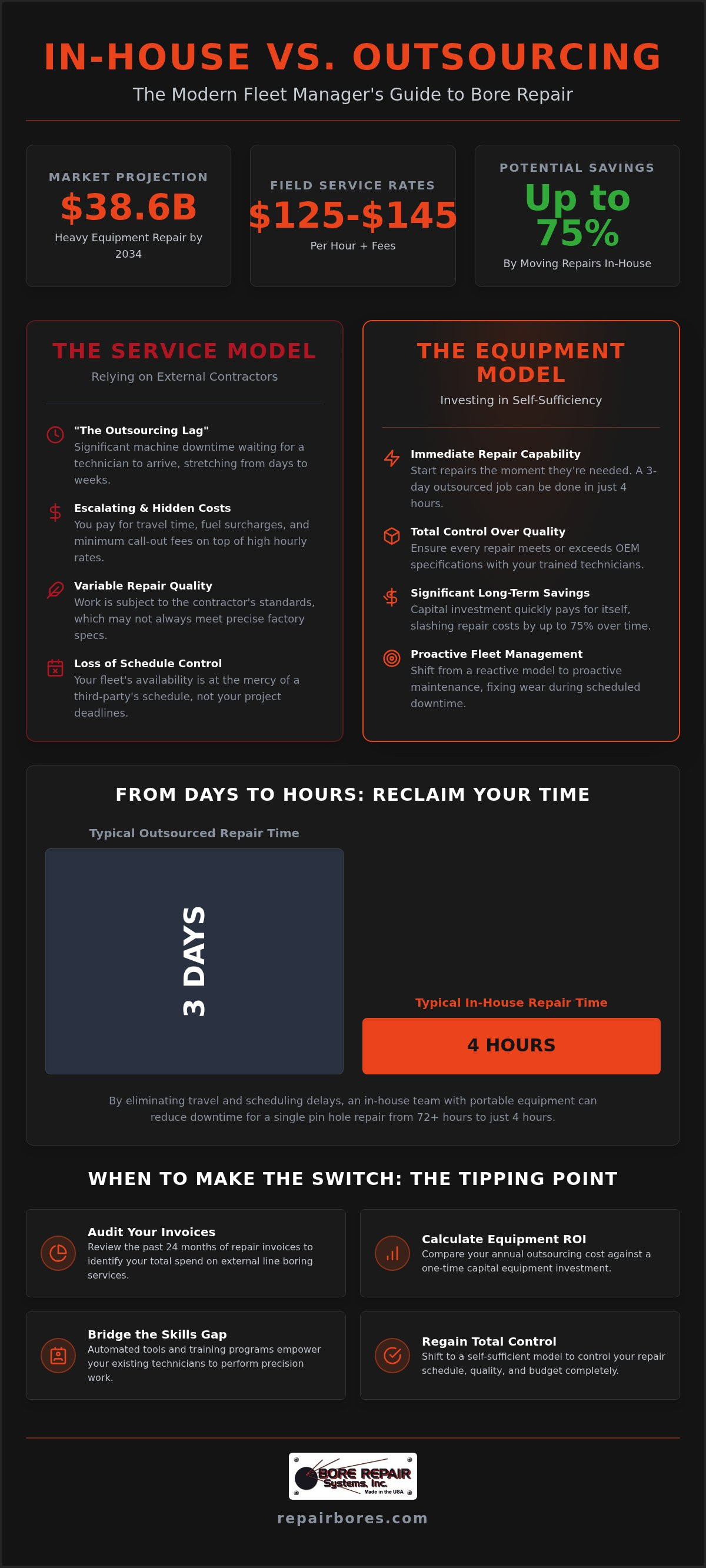
Did you know that the heavy equipment repair market is projected to hit $38.6 billion by 2034, driven largely by rising field service rates and a persistent technician shortage? With field service rates now averaging $125 to $145 per hour plus specialized supply fees, the debate over in-house line boring vs outsourcing has become a critical financial decision for fleet managers in 2026. You likely feel the sting of every hour an excavator sits idle while you wait for an outside contractor to arrive. It's frustrating to pay premium rates only to receive variable repair quality that doesn't always meet factory specs.
We understand that your priority is keeping your machines moving without breaking the maintenance budget. This guide breaks down the trade-offs between investing in your own equipment and relying on external shops. You'll discover how portable bore repair technology can slash your repair costs by up to 75 percent and put you back in control of your turnaround times. We'll examine current labor costs, equipment ROI, and the training required to achieve precision results in your own shop.
Table of Contents
What is Heavy Equipment Bore Repair: In-House vs. Outsourcing?
Heavy equipment bore repair is the specialized process of restoring worn pivot points, hitches, and pin holes to their original dimensions. Over thousands of hours of operation, the constant friction and load on excavator arms, loader buckets, and articulated joints cause these holes to become "egg-shaped" or oversized. This wear leads to excessive play, reduced machine accuracy, and eventually, catastrophic component failure. The technical foundation of this work is rooted in Boring (manufacturing), which uses a single-point cutting tool to achieve high-precision internal diameters. The primary goal is always returning machinery to service with factory-spec tolerances using two core technologies: automated bore welding to add metal back to the surface and precision line boring to cut it to size.
When a fleet manager faces these mechanical failures, the choice between in-house line boring vs outsourcing becomes a strategic pivot point for the business. The Service Model relies on hiring external contractors to perform on-site fixes. The Equipment Model, championed by Bore Repair Systems, Inc., focuses on ownership and self-sufficiency. This isn't just about choosing a tool; it's about choosing an operational philosophy. One model leaves you dependent on a third party's schedule, while the other puts the timeline and quality control directly in your shop's hands.
The Reality of Outsourced Field Service
Relying on external contractors for on-site repairs is often seen as a path of least resistance, but it comes with significant logistical baggage. You aren't just paying for the repair itself. You're paying for the technician's travel time, fuel surcharges, and minimum call-out fees. In high-demand industrial sectors, scheduling these specialized services is a constant challenge. If a contractor is backed up for two weeks, your machine stays down. This lack of control makes it difficult to manage tight project deadlines or sudden equipment failures. You're effectively at the mercy of a vendor's availability and their specific standard of work.
The Transition to In-House Repair Capabilities
Moving toward in-house repair starts with investing in portable line boring machines and automated welders. This shift allows your shop to stop reacting to failures and start managing them proactively. When you weigh in-house line boring vs outsourcing, the ability to develop internal expertise through professional training becomes a major factor. Instead of waiting for a component to fail, you can fix wear during scheduled downtime. This proactive stance, supported by Bore Repair Systems, Inc., ensures that your machines remain at peak performance. It transforms your maintenance department from a cost center into a strategic asset that protects the lifespan of your entire fleet.
The In-House Advantage: Speed, Control, and Precision
Evaluating in-house line boring vs outsourcing requires more than a simple price comparison. It's a strategic Make-or-Buy Decision that impacts your entire fleet's availability. The most significant benefit of ownership is the total elimination of "The Outsourcing Lag." This is the dead time spent waiting for a field service technician to arrive, which can stretch from days into weeks during peak construction seasons. When you own the equipment, you set the priorities based on your production needs, not a third party's schedule.
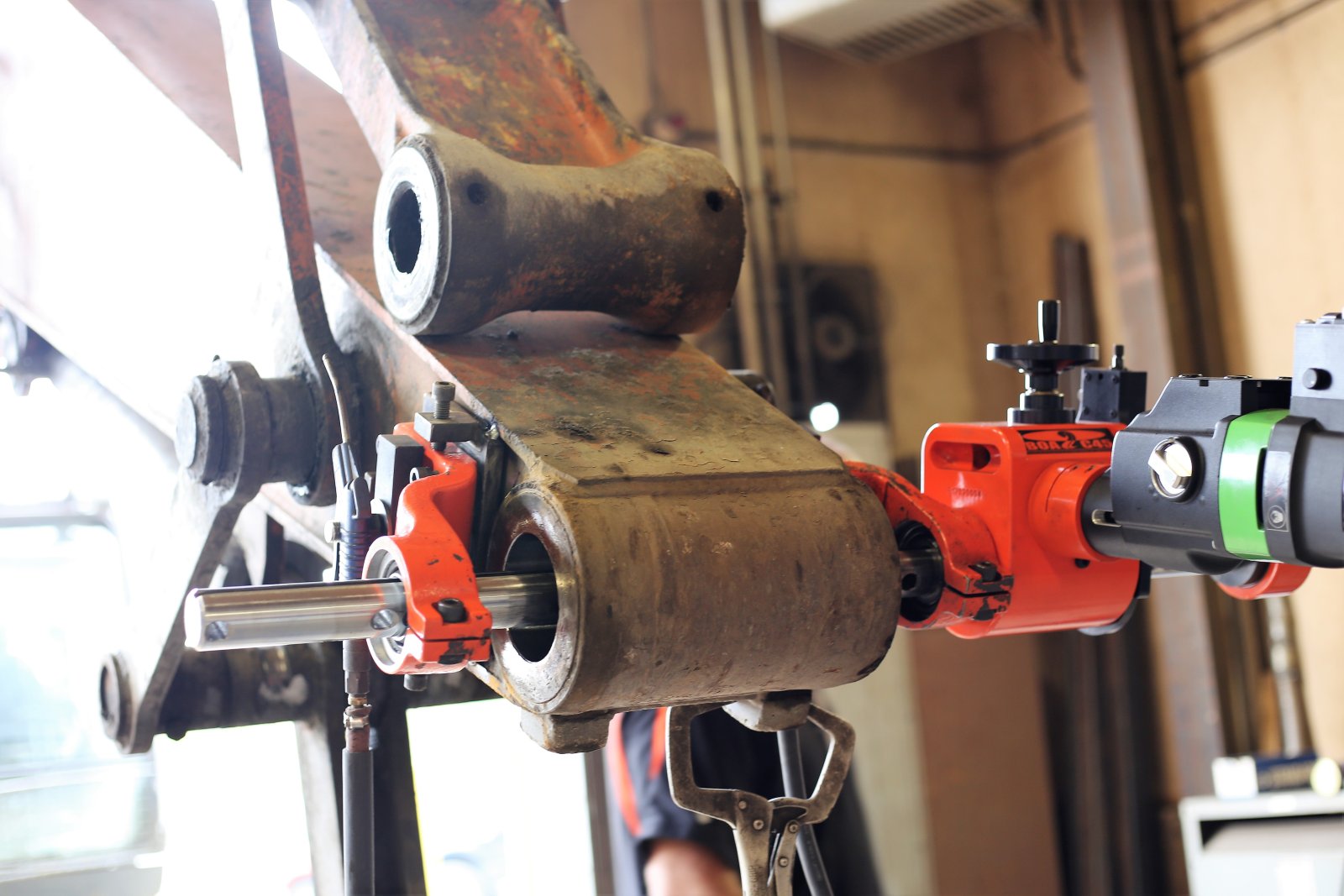
Operational control also means you can address bore wear before it causes secondary damage. Many shops run equipment with worn pivot points longer than they should because they want to avoid the high cost of a service call. Owning portable tools allows your team to perform repairs in the field without full machine disassembly. You can fix a single pin hole during a lunch break or between shifts, preventing the "slop" that eventually destroys bushings and pins.
Reducing Machine Downtime
Immediate repair capability transforms your shop's efficiency. In a typical in-house line boring vs outsourcing scenario, an outsourced repair for an excavator pin hole might take three days once you factor in scheduling and travel. An in-house team using the right tools can finish that same job in four hours. This speed saves thousands of dollars in lost production revenue. For shop managers, the psychological benefit of independence is immense. You gain the confidence that your fleet stays in the dirt, not in the shop.
Ensuring Consistent Repair Quality
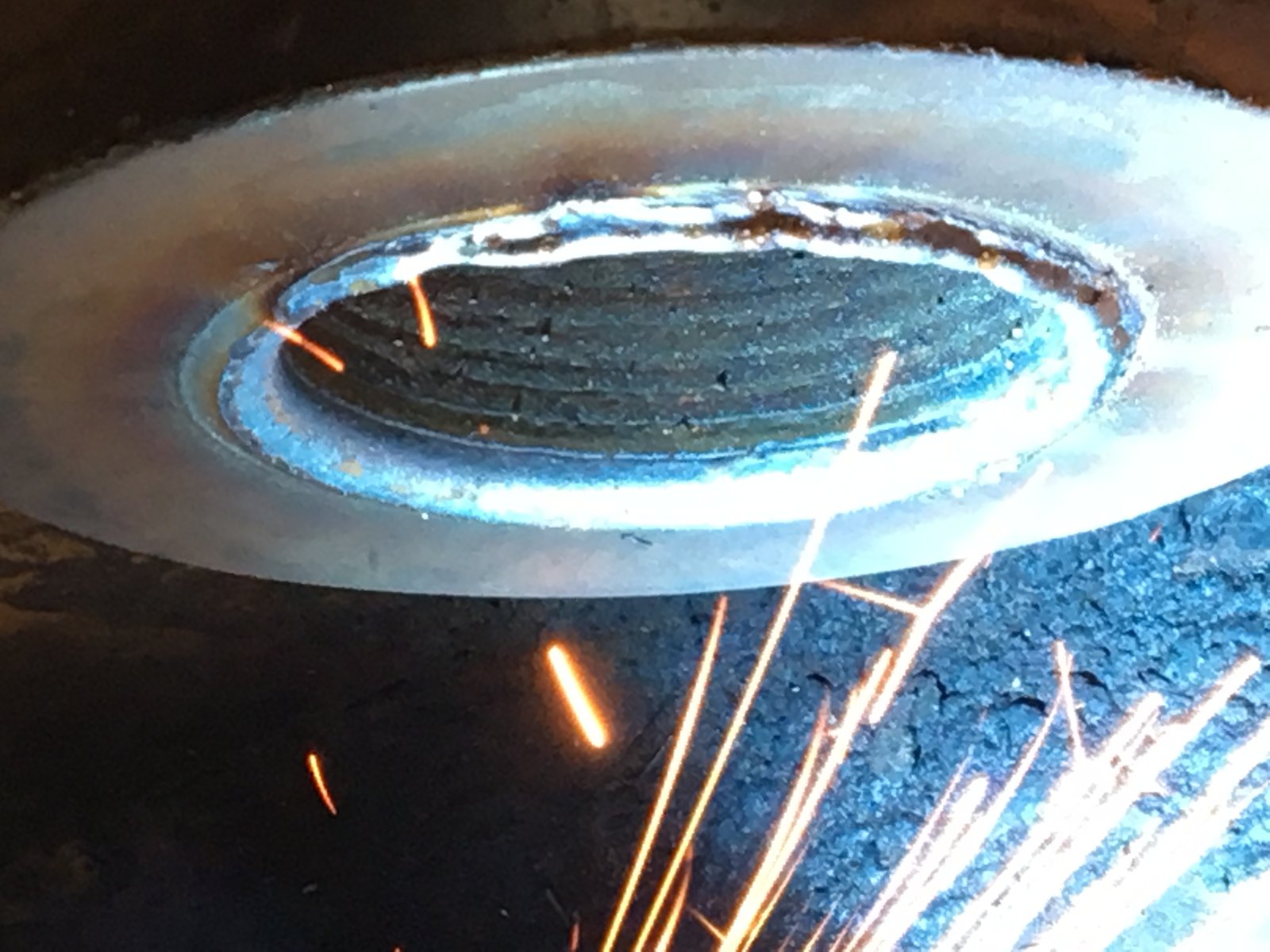
External contractors often prioritize speed over precision to move to their next job. Your in-house team has a vested interest in the machine's long-term durability. Using automated bore welding technology ensures that every repair achieves perfect concentricity. This automated approach removes the variability of manual welding, creating a consistent surface for the boring bar to cut. Standardizing these procedures ensures factory-spec tolerances across every machine you own. To begin building this level of self-sufficiency, you can review our professional bore repair equipment options.
Direct Cost Analysis: Unit Rates vs. Capital Investment
When you evaluate the financial impact of in-house line boring vs outsourcing, start with the hard numbers on your invoices. A single outsourced bore repair typically costs between $2,500 and $5,000. This figure covers the specialized labor, equipment mobilization, and consumables required to weld and bore a standard set of pivot points. While this avoids an upfront capital outlay, it represents a recurring expense that never builds equity. In contrast, the Total Cost of Ownership (TCO) for a professional system includes the initial purchase, specialized tooling, and ongoing consumables like welding wire and carbide inserts.
The "Break-Even Point" is the most critical metric for fleet managers. For many operations, repairing as few as five to eight holes per year justifies the investment. If your shop handles this volume, the equipment often pays for itself within the first 12 to 18 months. Beyond the immediate hardware costs, you gain hidden financial advantages. Tax depreciation strategies, such as Section 179 in the United States, allow for significant first-year write-offs. Additionally, owning high-quality repair tools increases your overall shop capability, which can improve the eventual resale value of your entire fleet by ensuring all pin holes remain at factory specs.
The Hidden Costs of Outsourcing
Invoices from field service contractors rarely tell the whole story. You must account for travel expenses, per diems, and the inevitable emergency service surcharges when a machine breaks down during a critical project. Perhaps the most expensive hidden factor is "Waiting Labor." When a machine is down, your operators are often standing idle or performing low-value tasks while earning their full hourly wage. If an operator sits for two days waiting for a contractor, you've lost thousands in production revenue and hundreds in wages. Liability and insurance complexities also increase when you bring outside contractors onto a busy job site or into your facility.
ROI of In-House Equipment
The payback period for a standard line boring and welding package is remarkably short for high-utilization fleets. In the context of bore repair, ROI is the ratio of avoided service fees to the total equipment cost. By performing these repairs yourself, you're essentially "paying" your own shop instead of a third party. To maximize this return, your team must follow a strict protocol for line boring machine maintenance to ensure tool longevity and cutting accuracy. Consistent care extends the life of your boring bars and automated welders, allowing the equipment to generate profit long after the initial investment is recovered.
Assessing Your Fleet: When to Pull the Trigger on Equipment
Deciding between in-house line boring vs outsourcing requires an honest look at your maintenance ledger. Start by auditing your past 24 months of repair invoices. Don't just look at the final total. Break out the travel fees, fuel surcharges, and minimum call-out charges that external contractors apply to every visit. If your records show more than five major bore repairs annually, you've likely reached the tipping point. At this volume, the money you're sending to outside shops is enough to fund a permanent, high-quality equipment asset for your own facility.
Geographic isolation is another critical factor in this assessment. If your job sites are located far from major industrial hubs, mobilization costs can easily double the price of a repair. You're effectively paying a premium for a technician to sit in a truck. Analyze the frequency of your "emergency" repairs versus "planned" maintenance. If you find yourself constantly paying rush fees to get a machine back in the dirt, the lack of in-house tools is actively draining your project margins. A diverse fleet with varying bore sizes also benefits from ownership, as you can customize your boring bar and accessory kits to match your specific machinery.
The Volume Threshold
For companies with multi-site operations, a centralized "mobile" repair kit offers a massive advantage. Instead of hiring different contractors with variable quality for every location, you can dispatch one internal expert with a standardized set of tools. This ensures that a loader bucket pin in one region is repaired to the same factory specs as an excavator hitch in another. As your fleet grows, your cost per repair continues to decrease. You're no longer subject to the annual rate hikes of service providers; you're only paying for consumables and your own team's time.
Bridging the Skill Gap
Many managers hesitate to bring repairs in-house because they don't have a traditionally trained machinist on staff. Modern technology has changed this dynamic. Patented automated bore welding systems handle the heavy lifting, allowing a standard shop mechanic to produce perfect welds with minimal manual intervention. The "learning curve" objection is easily solved through professional line boring operator training. These programs focus on practical, hands-on skills that turn your existing mechanics into precision repair specialists. If you are ready to take control of your maintenance schedule, you can explore our line boring and welding systems to see which setup matches your fleet's needs.
Bore Repair Systems: Tools and Training for Self-Sufficiency
Bore Repair Systems, Inc. operates on a simple philosophy: we empower you to handle your own repairs. We chose long ago to focus exclusively on manufacturing and education rather than providing on-site services. This specialization makes us a neutral partner in your decision between in-house line boring vs outsourcing. Our success is measured by your shop's independence and the precision of your finished bores. We don't want to be the contractor you call; we want to be the partner that provides the tools and knowledge so you never have to make that call again.
The real power of our system lies in the synergy between automated bore welders and line boring machines. Welding by hand is slow, inconsistent, and prone to hard spots that destroy cutting tools. Our automated systems lay down consistent, high-quality beads that make the subsequent boring pass faster and more accurate. This systematic approach is why professional training is the most important part of the package. It's not just about running a machine; it's about mastering a repeatable process that eliminates guesswork and ensures every repair meets factory specifications.
Precision Engineering for the Field
The portable systems manufactured by Bore Repair Systems, Inc. are designed to be rigid enough for heavy industrial cuts while remaining light enough for a single technician to set up in the field. This portability is what makes the equipment model so effective for "egg-shaped" holes on articulated joints or loader buckets. You don't have to haul the component to a machine shop; you bring the shop to the machine. To maximize your versatility, you can customize your setup with essential accessories such as specialized mounting brackets, facing heads, and small-bore kits that allow you to tackle any repair challenge that enters your yard.
Your Partner in Operational Independence
We don't just ship a machine and walk away. We provide ongoing technical support and operator resources to ensure your investment stays productive for decades. The transition from outsourcing to in-house capability is a significant move, but it's the only way to fully protect your bottom line from rising field service rates and the "Outsourcing Lag." Whether you manage a small local fleet or a national construction operation, Bore Repair Systems, Inc. can help you build a customized equipment quote that matches your specific repair volume. It's time to take control of your maintenance schedule and stop letting a contractor's calendar dictate your productivity.
Take Command of Your Fleet Maintenance
The strategic choice between in-house line boring vs outsourcing determines whether your shop operates as a profit center or a recurring expense. Bringing these capabilities under your own roof effectively eliminates the "Outsourcing Lag" and stops the drain of premium field service rates. You gain the power to set your own repair priorities and ensure every articulated joint or excavator arm meets factory-spec tolerances. This independence doesn't just save money; it protects your equipment's long-term resale value and maximizes uptime in the dirt.
Success in-house requires more than just hardware. We provide the total package: patented automated bore welding technology, professional-grade line boring machines, and industry-leading training programs. Our decades of industrial expertise ensure your team has a seasoned partner for technical support and operator education. You don't have to wait for a contractor's schedule to align with your production needs. Request a custom quote for your in-house bore repair system today and start building your internal capabilities. Your shop has the potential for precision; we provide the tools to unlock it.
Frequently Asked Questions
How much does a professional line boring machine cost in 2026?
Prices vary significantly based on the machine's origin and complexity. Entry-level portable models in the 2026 market are available for approximately $1,600, while advanced industrial boring machines can cost upwards of $117,000. You must also factor in the cost of chrome-plated boring bars, which range from $575 for shorter lengths to over $2,000 for 96-inch bars. These investments allow for high-precision internal diameters on heavy components.
Is it hard to learn how to use an automated bore welder?
Automated bore welders are designed to simplify a complex task for standard shop mechanics. Unlike manual welding, which requires extreme dexterity, these systems use patented technology to lay consistent beads automatically. Most operators gain proficiency through a structured training program. These sessions focus on torch positioning and parameter adjustment, allowing a mechanic to produce factory-spec results without years of specialized welding experience.
What is the typical ROI for bringing bore repairs in-house?
Many heavy equipment owners see a complete return on investment after just two to five major repairs. When you weigh the costs of in-house line boring vs outsourcing, you save on the $125 to $145 hourly rates and $100 minimum supply fees common in field service. By eliminating contractor travel costs and reducing machine downtime, the equipment typically pays for itself within the first year of operation.
Do I need a certified machinist to operate a line boring machine?
You don't need a certified machinist for most portable repair applications. While the work requires a high degree of precision, modern equipment is engineered for use by skilled heavy equipment mechanics. Proper training is the key factor. Operators must understand machine guarding and how to achieve factory-spec tolerances, but a formal machining degree is rarely a requirement for successful field or shop repairs.
Can portable line boring machines handle large mining equipment?
Portable systems are specifically engineered to handle the massive pivot points found on mining and construction machinery. These tools mount directly onto excavator frames, loader arms, or articulated joints. This capability allows your team to perform precision work on-site, which eliminates the massive logistical expense of transporting oversized components to a stationary machine shop. It is the most efficient way to maintain a large-scale fleet.
What happens if I try to fix a bore without automated welding?
Attempting a manual fix often leads to inconsistent surface hardness and "hard spots" that damage cutting tools. Manual welding is slow and produces uneven beads that cause tool chatter during the boring process. This makes it extremely difficult to achieve a perfectly concentric finished bore. Automated welding ensures a uniform surface, which is critical for the boring bar to cut a clean, precise diameter.
Does in-house repair affect my equipment warranty?
Performing your own repairs generally does not void a warranty if the work meets the manufacturer's specified tolerances. Most OEMs accept professional repairs that maintain the mechanical integrity of the component. To protect yourself, always document the repair process and ensure your team uses precision tools that can hold factory specs. This documentation proves the repair meets or exceeds the original standards of the machine.
How do I choose between a portable and a stationary line boring system?
The decision depends on where the work happens and the size of the components. Portable systems are the standard choice for heavy equipment because they allow for on-site repairs without full machine disassembly. Stationary systems are better for high-volume manufacturing where parts are easily moved to a fixed station. For most maintenance and repair operations, the ability to bring the tool to the machine is the primary driver of efficiency.
Comments