

Misaligned Bore Repair Techniques: Restoring Precision to Heavy Equipment

Updated: Sep 1
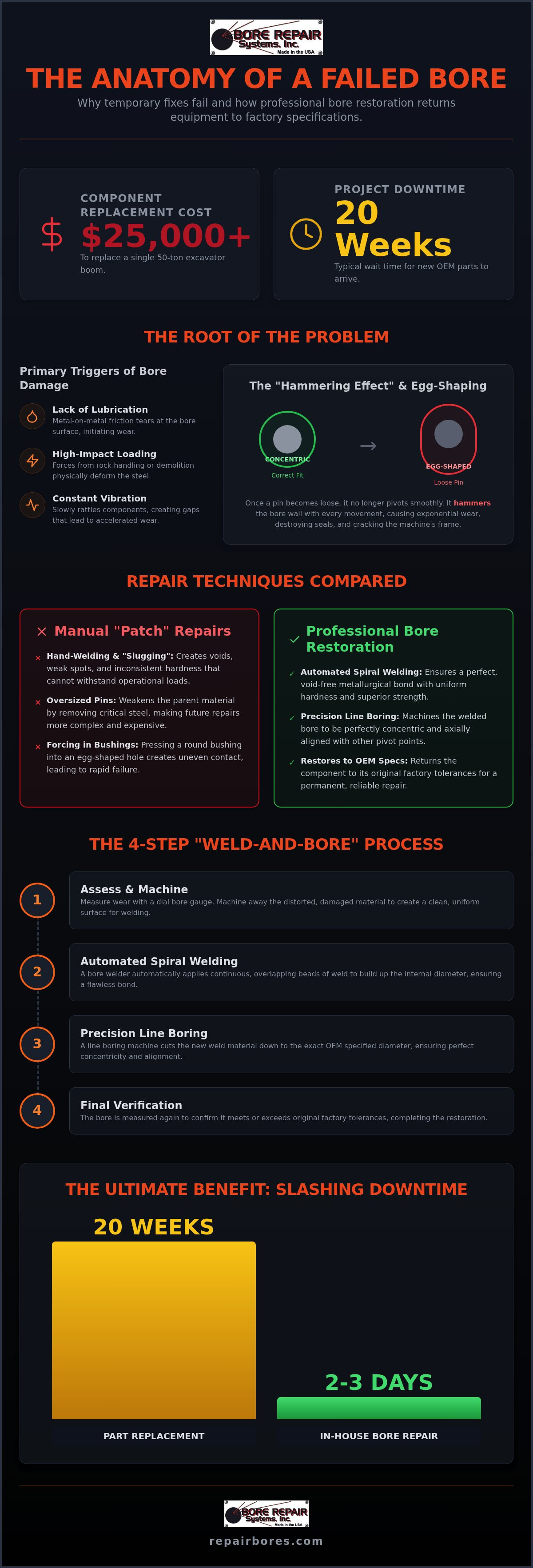
Replacing a 50-ton excavator boom can cost over $25,000 and stalls your project for up to 20 weeks while you wait for parts. When a pivot point becomes egg-shaped or loses its alignment, the machine doesn't just lose precision; it starts destroying itself. You already know that loose pins act like hammers, sending shockwaves through the frame and blowing out hydraulic seals. It's a frustrating cycle of downtime and safety risks that temporary manual weld repairs rarely solve for long.
Mastering professional misaligned bore repair techniques is the most effective way to return your equipment to factory tolerances without the massive expense of new components. By using automated spiral welding and precision machining, you can restore perfect concentricity and structural integrity in the shop or the field. This guide explores the "weld-and-bore" synchronization required to correct severe wear and ensure your equipment meets original OEM specifications. We will examine the specific methods that eliminate human error and minimize future wear through exact mechanical alignment.
Table of Contents
Understanding the Causes of Misaligned and Egg-Shaped Bores
Heavy equipment joints are designed to operate within tight tolerances. When those tolerances fail, the machine's efficiency drops and safety risks rise. Most bore damage starts with three primary triggers: lack of lubrication, high-impact loading, and constant vibration. Lubrication is the first line of defense; without it, metal-on-metal contact generates friction that tears at the bore surface. High-impact loading, common in demolition or rock handling, physically deforms the steel, while vibration slowly rattles components out of their original positions.
The most destructive force in a pivot point is the "hammering effect." Once a pin becomes slightly loose, it no longer rotates smoothly. Instead, it strikes the side of the bore with every movement. This impact creates exponential wear, turning a minor gap into a major failure in a short amount of time. This is why misaligned bore repair techniques are critical; you aren't just filling a hole, you're stopping a process that can eventually crack a machine frame.
Wear is rarely uniform. Most bores become "egg-shaped" because the force is applied in a specific direction. In an excavator bucket, for example, the load-bearing zone at the top or bottom of the bore takes the brunt of the pressure. Over time, the circular hole stretches into an oval. This is different from simple surface wear. Structural misalignment occurs when the centerlines of two or more bores no longer match, making it impossible for a pin to pass through without binding.
The Mechanics of Bore Distortion
Precision joints rely on two factors: concentricity and axial alignment. Concentricity ensures the bore is a perfect circle around its center point. Axial alignment ensures that multiple bores share the same straight path. Friction-induced heat during operation can actually soften the metal, making it easier for abrasive contaminants like grit or sand to grind away the surface. To restore these properties, technicians use the principles of Boring (manufacturing) to cut away the distorted material and create a clean, aligned path for the new pin.
Signs Your Bores Require Immediate Correction
You don't always need a micrometer to spot a problem. Look for rust "weeping" around a pivot point, which is a sign of fretting corrosion caused by a loose pin. In severe cases, you might see daylight between the pin and the bore wall. Operators often report a "clunking" sound or a noticeable loss of precision in bucket movements. To get an accurate diagnosis, use a dial bore gauge. This tool measures the diameter at multiple points, allowing you to detect out-of-roundness that isn't visible to the naked eye. Identifying these issues early allows you to implement misaligned bore repair techniques before the damage requires a total component replacement.
Evaluating Misaligned Bore Repair Techniques: Manual vs. Automated
Choosing between different misaligned bore repair techniques often comes down to a choice between a temporary patch and a permanent restoration. A common mistake in the field is the "oversized pin" approach. While it seems like a fast fix, it actually weakens the component by removing critical base metal to accommodate a larger diameter. You're simply delaying the inevitable while making the eventual repair more complex and expensive. Similarly, pressing a round bushing into an egg-shaped hole is a recipe for disaster. Without full surface contact, the bushing will shift and deform under load, leading to rapid failure of the new joint.
The professional standard requires a "weld-and-bore" process. This involves building the bore back to a smaller-than-original size and then machining it to exact OEM specifications. The evolution of this technology is reflected in engineering milestones like a Portable line boring machine patent, which highlights the industry's shift toward achieving precision alignment without stripping a machine down to its frame. This combined approach ensures the bore is perfectly concentric and structurally sound, returning the equipment to its original mechanical integrity.
The Failure of Manual Hand-Welding
Manual welding in a bore is notoriously difficult. It's nearly impossible to maintain uniform heat input when working inside deep or vertical holes. Technicians often resort to "slugging", which is the practice of placing scrap metal in the void to fill it faster. This creates internal voids and weak spots that can't handle high-impact loads. Hand-welding also creates "hard spots" that are brutal on cutting tools during the machining phase. These inconsistencies lead to an uneven metallurgical bond that invites premature pin failure and crack propagation.
Advantages of Automated Bore Welders
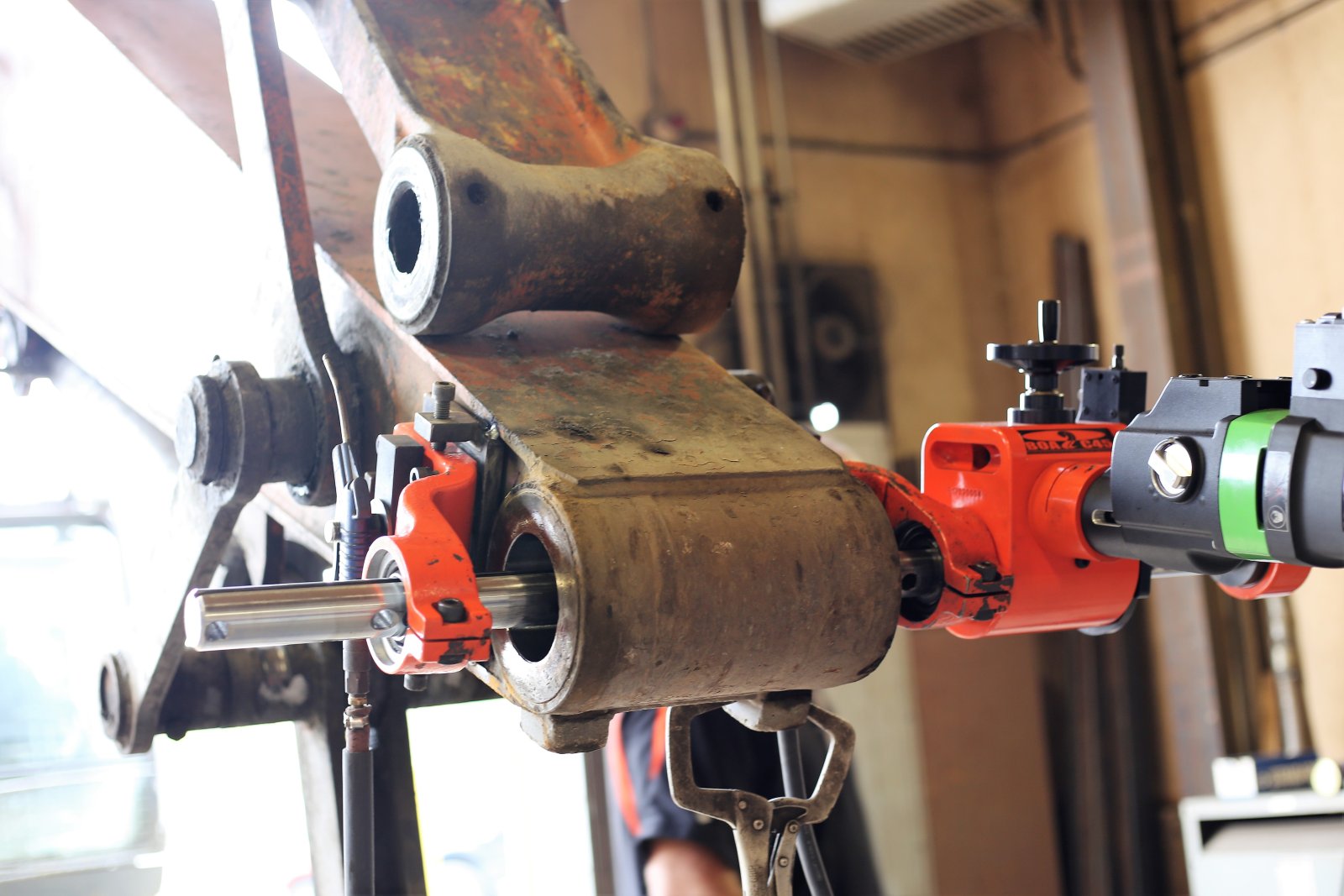
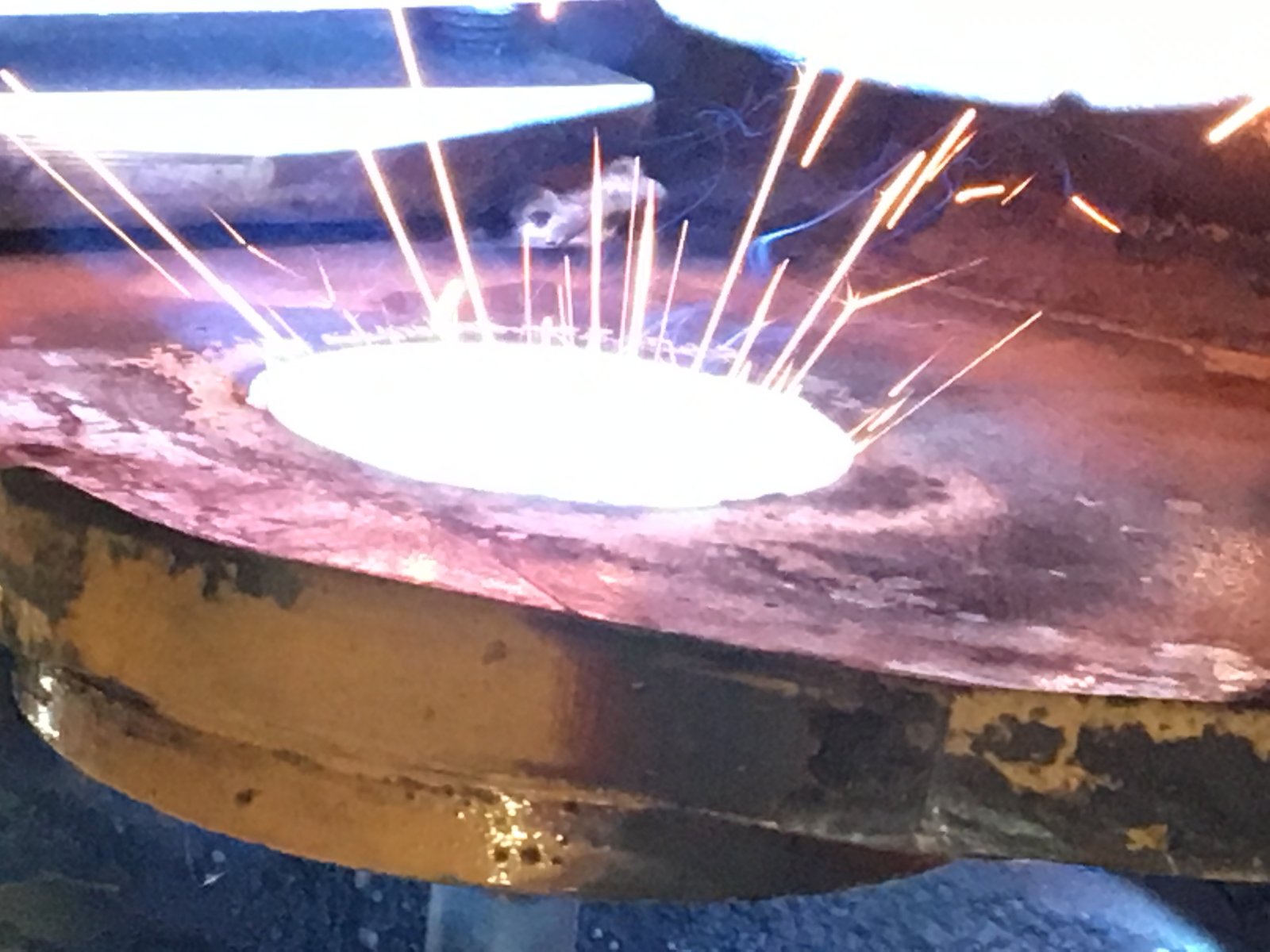
Automated systems eliminate the variability of human error. A Bore Welder uses a continuous spiral bead deposition, ensuring uniform material thickness throughout the entire bore. This process provides a controlled heat-affected zone (HAZ), which is vital for maintaining the strength of the base metal. You get a cleaner, denser weld that machines smoothly back to size. Beyond quality, the speed is a major factor. Automated systems complete welds in a fraction of the time it takes a skilled hand-welder, significantly reducing your project timeline. If you want to improve your shop's efficiency, consider looking at the latest bore repair equipment available today.
The Step-by-Step Technique for Professional Bore Restoration
Professional bore restoration is a methodical process. It requires specific steps to ensure the new material bonds correctly and the final hole aligns perfectly with the machine's original geometry. Using systematic misaligned bore repair techniques prevents the "slop" associated with haphazard manual fixes. The goal is to create a repair that is indistinguishable from the factory original in both strength and precision.
Preparing the Bore for a Permanent Bond
Preparation is the most critical phase of the job. Begin by removing all traces of old grease, carbonized oil, and rust. Contaminants will cause weld porosity, which leads to immediate structural failure under load. Use mechanical cleaning tools like wire wheels or grinders to reach bright metal. If you find cracks during inspection, you must grind them out completely before proceeding. For high-tensile industrial steels, pre-heating the bore is often necessary to minimize thermal stress and prevent hydrogen cracking. Finally, establish a datum point. This reference allows you to verify that the repair stays true to the original equipment centerline throughout the process.
Building Material and Precision Machining
Once the surface is prepared, you can begin the material buildup. Use a professional bore welder for sale to apply a consistent spiral bead. This automated process builds back the internal diameter (ID) with uniform thickness. It avoids the heat distortion and hard spots common in manual welding. You want to add enough material to allow for a clean machining pass without over-welding, which wastes time and consumables.
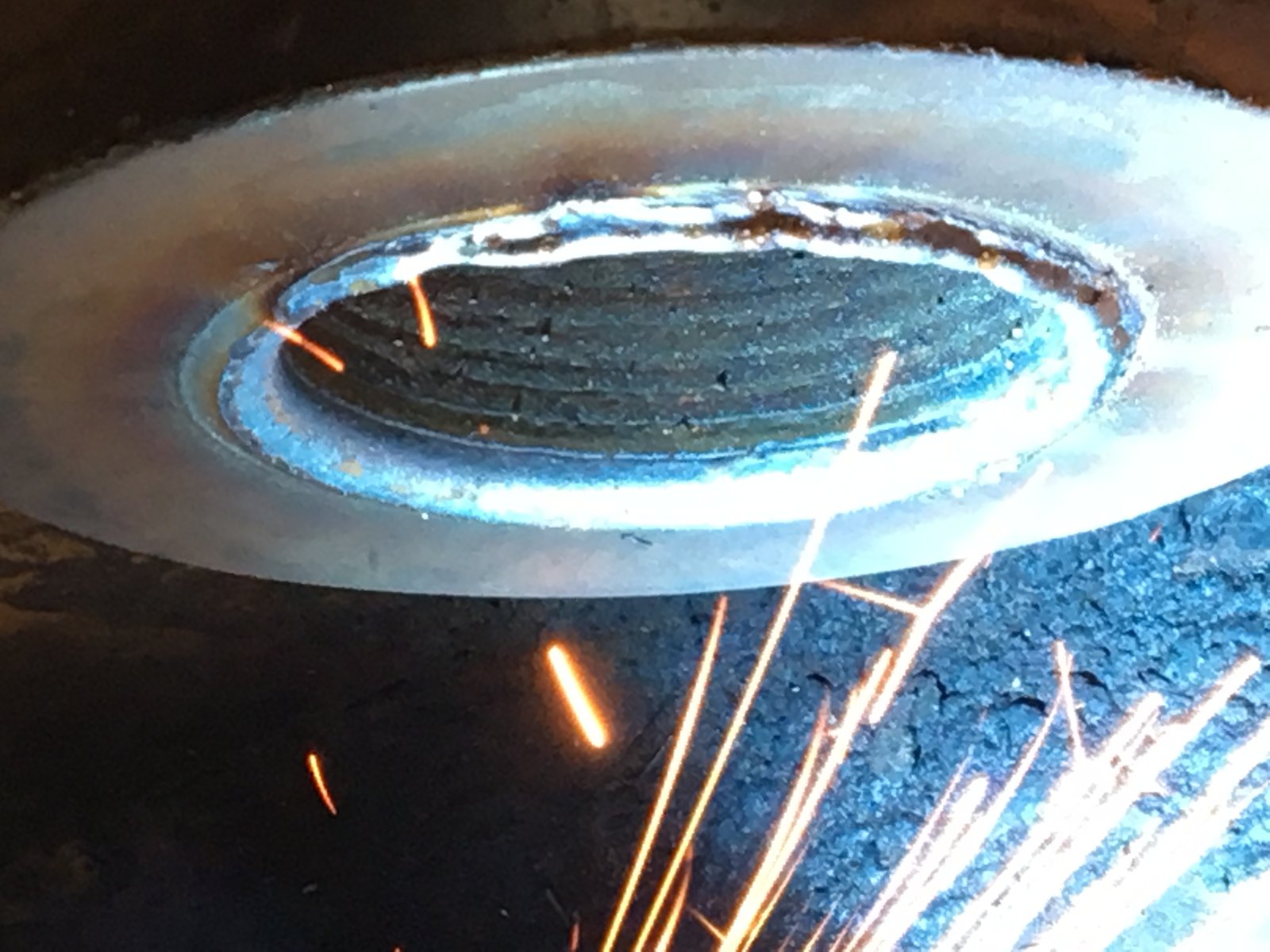
After welding, set up your line boring machine. Proper axial alignment is vital here. Use centering cones and mounting kits to secure the boring bar exactly on the original centerline. The machining phase typically involves two distinct stages:
Roughing Cuts: These initial passes remove the bulk of the weld material and true up the bore geometry.
Finishing Cuts: These slow, shallow passes achieve the final tolerance and a smooth surface finish for the bushing.
Verification is the final step in these misaligned bore repair techniques. Use precision dial gauges to check the bore at multiple depths and angles. This ensures the repair meets OEM specifications for concentricity and diameter. A successful repair allows the pin to slide in with a perfect fit, restoring the mechanical integrity of the entire assembly.
Essential Equipment for Correcting Misalignment in the Field
Field repairs demand portability. Hauling a 20-ton frame to a machine shop is often impossible or prohibitively expensive. Successful misaligned bore repair techniques rely on equipment that brings shop-level precision directly to the job site. This requires more than just a basic motor. You need a setup that maintains axial alignment across distant pivot points. Choosing a reputable line boring machine manufacturer ensures your system has the rigidity and accessory support necessary for these complex restorations. High-quality line boring machine accessories, specifically spherical mounts, are essential. These mounts allow the boring bar to pivot, making it possible to align the centerlines of two distant bores that have worn in different directions.
Matching Machine Specs to Your Application
Power and stability are non-negotiable. Large-diameter industrial bores require high torque to cut through hardened weld material without stalling. While electric drive systems are common for mid-sized repairs, hydraulic drives offer the raw power needed for massive mining or construction equipment. Stroke length is another factor. Your machine must have enough travel to complete a pass without repositioning the tool mid-cut. Rigid boring bars are the backbone of the operation. Standard bars can sag over long distances, which ruins your alignment. Use chrome-plated, high-strength steel bars to ensure the cutting bit follows a perfectly straight path from the first bore to the last.
Tooling for Hardened and Specialized Materials
The right cutting tool makes the difference between a smooth finish and a ruined part. Carbide bits are the industry standard for machining through the tough, dense beads left by Bore Welders. If you're working with softer base metals, high-speed steel (HSS) might suffice, but carbide offers the durability required for consistent results in the field. For deep or recessed pivot points, you'll need torch extensions to ensure the automated weld reaches every surface. Gas coverage is equally vital. Using the correct bore welding accessories, like specialized gas nozzles, prevents porosity by maintaining a stable shield of 75/25 Argon/CO2. This ensures the metallurgical bond is strong enough to handle the machine's rated breakout force.
Precision equipment is an investment in your fleet's longevity. If you're ready to bring these capabilities to your shop, explore our professional Line Boring Machines and Bore Welders to start restoring your equipment today.
Maximizing ROI Through In-House Equipment and Training
Investing in in-house bore repair capabilities is about more than just owning tools; it's about controlling your schedule. When a major component like an excavator boom fails, lead times for OEM replacements currently range between 12 and 20 weeks. For a mining operation where downtime costs between $5,000 and $10,000 per hour, that delay is unacceptable. By mastering misaligned bore repair techniques in your own shop, you can reduce that window from months to days. You eliminate the logistical nightmare of arranging specialized freight for oversized loads and the high costs of third-party service providers. The break-even point for a professional system often arrives after just two or three major restorations, making it one of the highest ROI investments a maintenance manager can make.
The Cost of "Doing it Wrong"
Failed "hacks" and temporary fixes carry hidden expenses that don't show up on a quote. A manual weld that creates hard spots or a bushing pressed into an oval hole will eventually fail, often causing more damage than the original issue. Reworking a failed repair doubles your labor costs and increases the risk of cracking the machine frame. Professional repairs using automated systems ensure the metallurgical bond is sound, which extends the total service life of your heavy assets. Beyond the machine, safety is a primary concern. High-torque machining requires stable setups and precise operation to prevent accidents. A "first-time right" approach protects both your equipment and your personnel, ensuring that the structural integrity of the machine remains intact under peak loads.
Investing in Technical Proficiency
Equipment is only as good as the person operating it. Comprehensive line boring operator training is essential for achieving the precision required by OEM specifications. Training shortens the learning curve, allowing your team to move from setup to finished bore with confidence and speed. It also serves as a powerful retention tool in a competitive labor market. Skilled technicians value the opportunity to work with advanced technology and expand their technical expertise. When your team masters advanced bore welding techniques training, your shop's reputation for quality and reliability grows. This technical proficiency ensures that every misaligned bore repair technique you apply results in a durable, factory-standard finish. Ultimately, line boring training turns your maintenance department into a profit center by keeping your fleet in the field and out of the graveyard.
Take Control of Your Equipment Restoration
Restoring mechanical integrity to your fleet doesn't have to be a logistical nightmare or a budget-breaking expense. By implementing professional misaligned bore repair techniques, you transition from reactive "patch jobs" to a proactive maintenance strategy that doubles as a profit center. You've seen how automated spiral welding and precision line boring eliminate the variables of human error, ensuring every pivot point is returned to its original concentricity.
Explore Professional Bore Repair Systems and Training to see how our systems simplify complex restorations. Start rebuilding your fleet's precision today.
Frequently Asked Questions
Can I fix a misaligned bore without a line boring machine?
No, you cannot achieve a professional result without a line boring machine. Manual grinding or hand-welding lacks the mechanical control needed to ensure concentricity or axial alignment. A line boring machine is essential to establish a true centerline and machine the bore back to precise diameter specifications. Without this dedicated equipment, the repair remains a temporary patch that will likely lead to rapid component failure or pin binding.
How do I ensure two distant bores are perfectly aligned on the same axis?
You ensure alignment by using spherical mounts and a rigid boring bar. Spherical mounts allow the technician to pivot the bar, compensating for uneven wear patterns between the two distant points. By securing the boring bar through both bores at the same time, you guarantee that the final machining pass follows a single, straight axis. This precision is a core part of effective misaligned bore repair techniques.
What is the maximum amount of material I can add with a bore welder?
Bore Welders apply multiple layers of spiral beads to build up material as needed. While a single pass typically adds about 0.125 inches to the internal diameter, you can stack these passes to fill deeper wear zones. It's important to monitor the heat-affected zone during this process to maintain the base metal's integrity. If the wear is extremely deep, verify the structural limits of the component before adding excessive material.
Do I need to remove the boom or arm from the machine to repair the bores?
Removing the boom or arm isn't always necessary. Portable Line Boring Machines and Bore Welders are designed specifically for in-field use. You can perform the restoration while the component remains on the machine frame, provided there is sufficient clearance for the boring bar and the welding torch. This approach saves significant labor costs and eliminates the logistical challenges of hauling large parts to a centralized repair facility.
Is it better to use oversized pins or restore the bore to its original size?
It's always better to restore the bore to its original OEM size. Using oversized pins is a temporary fix that requires removing even more base metal, which ultimately weakens the joint. It also creates a logistical headache because the machine no longer uses standard parts. Restoring the bore allows you to use standard pins and bushings, maintaining the machine's value and making future maintenance much more straightforward.
How long does a typical misaligned bore repair take using automated systems?
A standard repair generally takes between four and eight hours per bore. This timeframe includes the initial setup, the automated welding phase, and the final machining passes. Automated systems are significantly more efficient than manual methods because they deposit a consistent, dense bead. This reduces the number of machining passes required to reach the final tolerance, allowing you to get the equipment back into service much faster.
What kind of welding wire is best for heavy equipment bore repair?
Most heavy equipment repairs use high-quality ER70S-6 solid wire with a 75/25 Argon and CO2 shielding gas. This combination offers excellent puddle control and creates a dense weld that machines smoothly. For specific applications involving high-impact or abrasive environments, you might use specialized hard-facing wires. However, ER70S-6 remains the industry standard for restoring common pivot points because it provides a reliable metallurgical bond that handles standard operating loads.
How do I prevent bores from becoming egg-shaped in the future?
Preventing egg-shaping requires consistent lubrication and timely pin replacements. When grease is missing, friction generates heat that softens the metal and leads to rapid deformation. Replacing pins at the first sign of play prevents the "hammering effect" from damaging the bore walls. Integrating these inspections into your scheduled maintenance and using misaligned bore repair techniques for early intervention will catch minor wear before it requires a major structural restoration.
Comments